
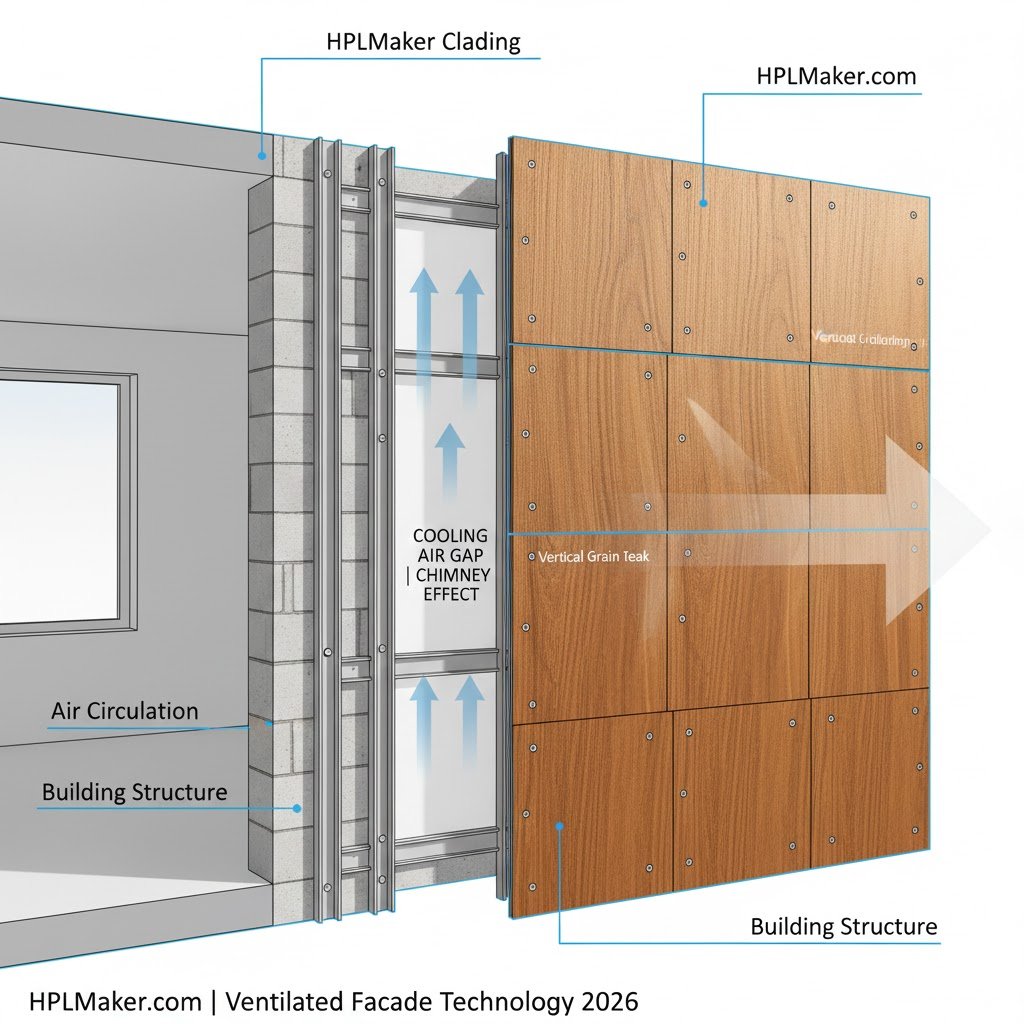
With global temperatures rising, 2026 is seeing a massive shift in how we build homes in India. It’s no longer enough for a house to look “cool”; it needs to actually stay cool.
Leading architects are moving away from sticking tiles directly onto walls. Instead, they are using the Ventilated Facade System with HPLMaker.com cladding. If you want to lower your electricity bills and protect your walls from dampness forever, this is the technology you need to know about.
What is a Ventilated Facade? (The “Chimney Effect”)
Unlike traditional stone or paint, HPL cladding is installed with a small gap (usually 25mm to 50mm) between the HPL sheet and your building’s main wall.
- Natural Airflow: This gap creates a continuous “chimney effect.” Hot air rises and escapes from the top, while cool air is pulled in from the bottom.
- Thermal Barrier: The HPL sheet acts as a heat shield, reflecting the sun’s rays before they ever touch your brick wall.
3 Reasons Why This is the 2026 Construction Standard
1. Drastic Reduction in AC Costs
In a typical Indian summer, your walls absorb heat all day and release it into your rooms at night. With HPLMaker’s ventilated system, your main structure stays in the shade 24/7. Homeowners are reporting up to a 30% reduction in air conditioning energy consumption.
2. No More Internal Dampness (Sillen)
One of the biggest problems in Indian homes is moisture trapped inside the walls, leading to peeling indoor paint and fungus. The constant airflow in a ventilated facade dries out any moisture, keeping your internal walls bone-dry and healthy.
3. Acoustic Insulation (Noise Control)
Living in a noisy city? The air gap between the HPL sheet and the wall acts as a natural sound buffer. It significantly reduces outside traffic noise, making your home a peaceful sanctuary.
Why HPLMaker.com is the Leader in Facade Engineering
A ventilated facade is only as good as the material used. If the sheet warps or cracks, the system fails.
- Structural Precision: HPLMaker sheets are engineered for perfect flatness. They don’t bend or sag, ensuring the ventilation gap remains consistent across the entire building.
- Wind-Load Certified: Our 2026 collection is tested to withstand high wind pressures, making it safe even for high-rise apartments and coastal villas.
- Premium Fixings: We don’t just provide sheets; we advise on the best aluminum framing systems to ensure your facade lasts for decades without a single rattle.
Conclusion
In 2026, a “luxury” home is a “smart” home. By choosing an HPL Ventilated Facade, you are investing in a technology that pays for itself through lower electricity bills and zero wall maintenance.
Build a house that breathes. Visit HPLMaker.com to download our Technical Guide on Ventilated Facade Systems today!