Exterior HPL Wall Cladding I HPL Cladding I HPL Exterior Grade Wall Cladding

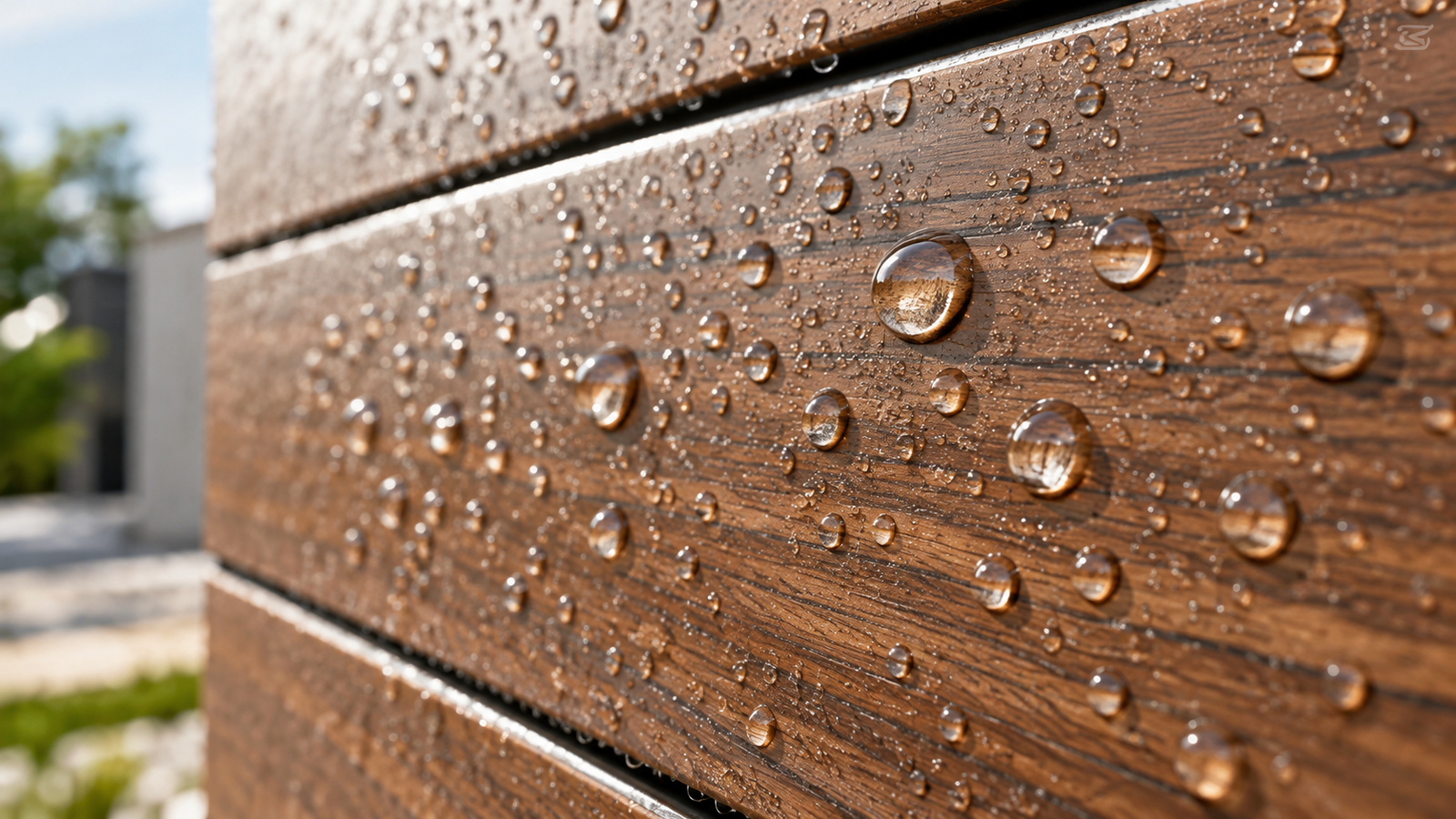
HPL sheets clean easily because the surface is a cured, non-porous resin layer formed under heat and pressure — dirt, dust and most stains sit on top of it rather than soaking in. In practice that means water, mild detergent and a soft cloth handle almost everything. The damage people cause comes from doing more than that, not less.
Most exterior surfaces get harder to clean as they age. Paint chalks and starts absorbing. Grout opens up. Textured render traps grit that will not wash out. Each cleaning takes more effort than the last, and eventually the honest answer is to repaint rather than keep scrubbing.
HPL behaves differently, and the reason is worth understanding properly — because it also explains the handful of things that will ruin the surface permanently.
Why the Surface Does Not Hold Dirt
During manufacture, layers of kraft paper are saturated with thermosetting resin and compressed under high heat and pressure. The resin flows into every space between the paper fibres and then cures — a permanent chemical change, not a drying process.
What comes out is a solid panel with almost no void space, finished with a clear overlay and, on exterior grades, a UV-cured surface layer. There is nothing for dirt to key into.
The same property explains the rest of the material's behaviour. Water does not soak in, so the panel does not swell in monsoon humidity. There is no damp, porous surface for mould to colonise. And because the decorative layer sits under a sealed overlay rather than on top of it, cleaning the panel does not gradually wear the pattern away — which is exactly what happens to a painted finish.
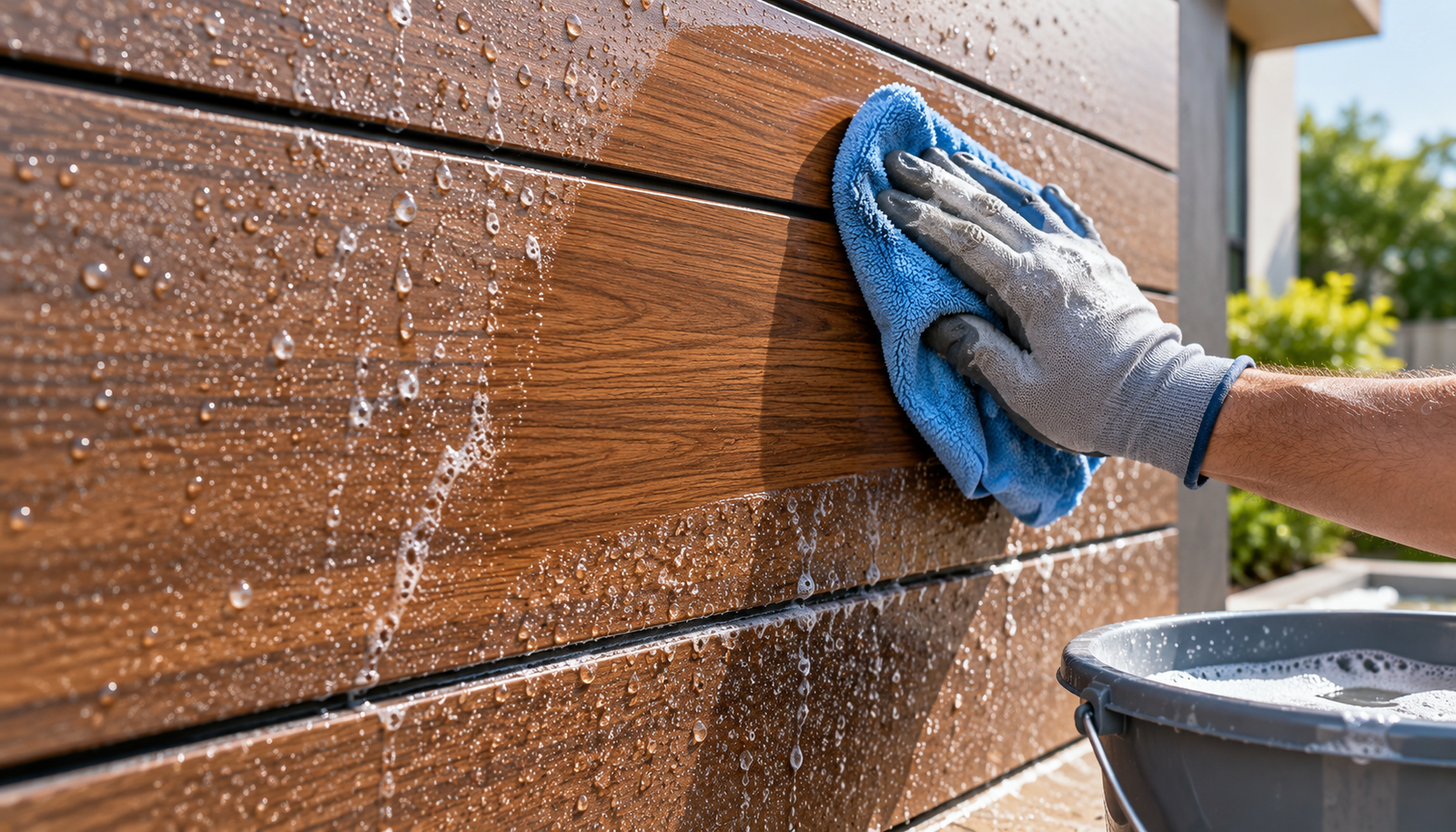
The Routine, in Five Steps
Twice a year is enough for most facades — once after the monsoon, once before it. Dusty cities or sites near ongoing construction may want quarterly.
- Rinse first with plain waterThis removes loose grit. Skip it and you grind that grit across the surface in the next step, which is how fine scratches happen.
- Mix a mild detergentOrdinary dish soap in water is genuinely sufficient. Specialist cleaners are not needed and some of them are actively harmful.
- Wash top to bottomSoft cloth, sponge or soft-bristle brush. Working downward stops dirty runoff from marking areas you have already cleaned.
- Rinse thoroughlyDetergent left to dry on the surface leaves a film that attracts more dust than it removed.
- Let it air dryOr wipe down with a clean soft cloth if your water is hard and tends to leave spotting.
What Ruins the Surface
HPL is resilient, but its resilience is in the cured surface layer. Damage that layer and you cannot restore it — there is no refinishing step for a laminate panel the way there is for timber.
Safe
- Water and mild detergent
- Soft cloth, sponge, soft-bristle brush
- Diluted white vinegar for mineral marks
- Isopropyl alcohol, briefly, for adhesive residue
- Prompt removal of bird droppings
Avoid
- Abrasive pads, steel wool, scouring powder
- Acidic or strongly alkaline cleaners, including many tile and bathroom products
- Solvents such as thinner and acetone
- Wax and polish — they build into a haze that holds dust
- High-pressure washing aimed into joints
The pressure washer question
The panel itself will take it. The joints and sealant often will not, and forcing water into a joint under pressure is one of the few reliable ways to get moisture behind a well-built facade.
If you use one, keep the pressure low, stand well back, and never aim directly into a joint line.
Specific Problems
Dust and general grime
Water streaking and mineral deposits
Algae and green growth
Bird droppings
Adhesive residue from tape or stickers
Paint splashes
Graffiti
When Cleaning Is Not the Answer
Worth being straightforward about this, because it saves people effort on the wrong thing.
If the same mark returns within weeks of every clean, the panel is not the problem. Persistent streaking below a sill means water is running across the face instead of dripping clear of it — a detailing issue. Recurring algae in one patch means that area stays damp, which usually points at blocked cavity drainage or a leak above. Rust staining running from a fixing point means something behind the panel is corroding, and no amount of surface cleaning touches that.
In each case the cleaning is treating a symptom. We would rather tell a customer that than sell them a cleaning schedule.
Keeping It Easy
- Keep gutters and downpipes clear so overflow does not run across the facade
- Trim planting back from the panel face — it holds moisture and abrades the surface in wind
- Check the cavity base is clear of leaves and debris, especially after the monsoon
- Inspect joint sealant once a year and address gaps early
- Cover panels during nearby painting or construction work
- Choose mid-tone shades if your area is dusty — they hide between cleanings far better than very light or very dark finishes
Frequently Asked Questions
Why are HPL sheets easy to clean?
How do you clean an HPL sheet?
How often should exterior HPL be cleaned?
Can you pressure wash HPL cladding?
What should never be used on HPL?
Does cleaning wear away the pattern over time?
Does HPL need sealing or re-coating?
Dealing with a mark that will not come off?
Send us a photo on WhatsApp. If it is a cleaning problem we will tell you how to shift it, and if it is a detailing problem we will tell you that instead.
Ask HPLMakerHPLMaker manufactures exterior-grade HPL cladding panels from Indore, serving projects across Madhya Pradesh and Central India.