
The Invisible Risk in Your Interior Design: Why Standard Laminates Fail and How to Choose the Right One
Choosing the right surface for your kitchen counters or wardrobe interiors seems straightforward until the first scratch appears or the edges begin to peel. For Indian architects and homeowners, the real challenge isn’t just picking a beautiful color; it’s ensuring that the aesthetic remains intact under the heavy humidity and daily wear of an Indian household.
Table of Contents
- Understanding HPL: Beyond the Surface Beauty
- Critical Selection Criteria for Indian Climates
- Standard Laminate vs. Premium HPL: A Side-by-Side Comparison
- The Science of Longevity: Why Most Laminates Fail
- Maintenance Tips for Long-Term Brilliance
- Frequently Asked Questions
Understanding HPL: Beyond the Surface Beauty
High-Pressure Laminate (HPL) is often confused with decorative papers or thin veneers, but the structural difference is profound. While standard decorative laminates focus heavily on the visual layer, HPL is engineered through intense heat and pressure, fusing multiple layers of kraft paper with resin.
The Role of Pressure in Durability
In the manufacturing process, the high-pressure environment creates a dense, non-porous surface. This density is what prevents moisture from seeping into the core of your furniture, a common issue in cities like Indore or Mumbai where humidity levels can fluctuate wildly.
Aesthetic Versatility for Modern Indian Interiors
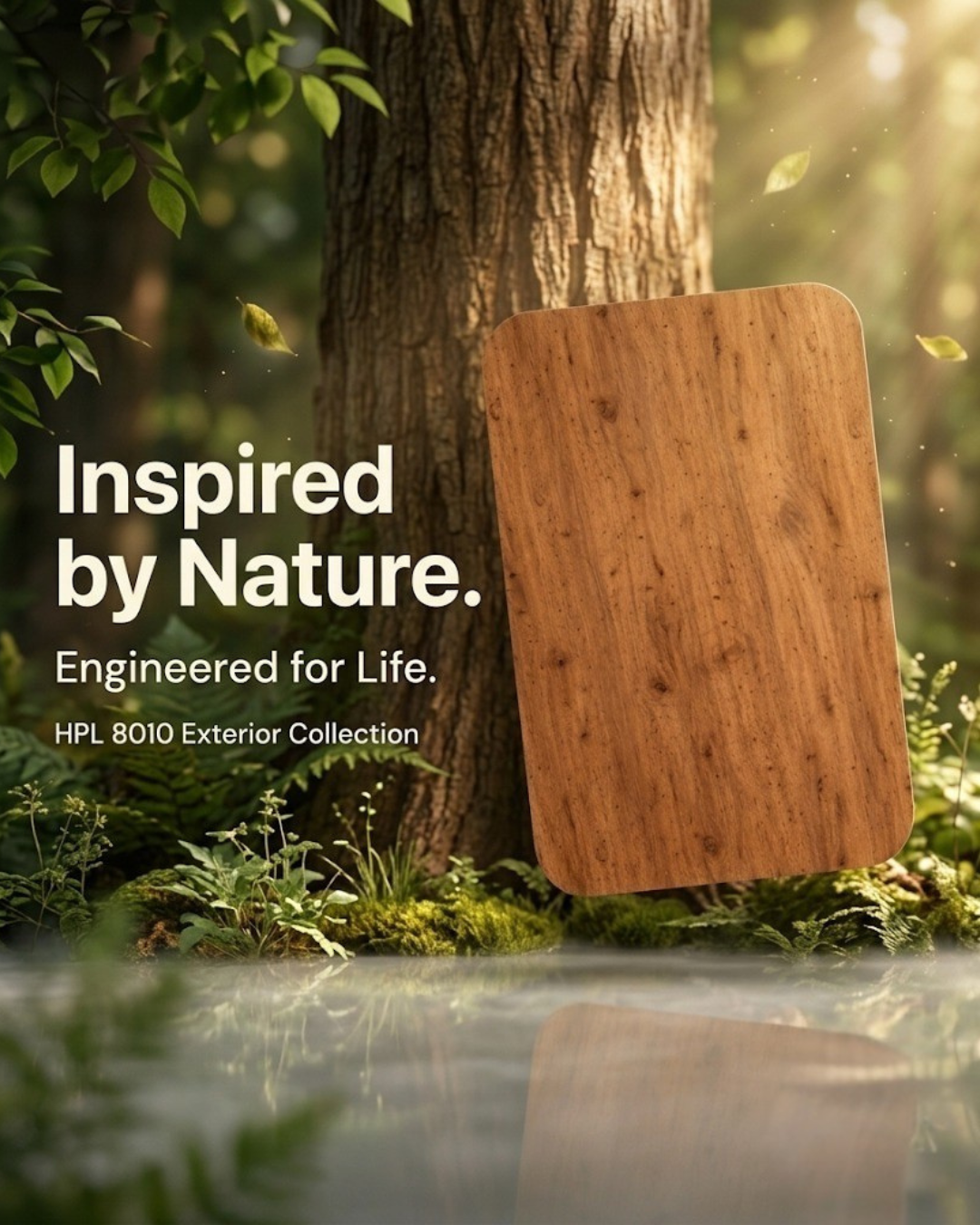
From matte stone finishes that mimic Italian marble to textured wood grains that bring warmth to a minimalist living room, HPL offers a spectrum of textures. This allows architects to maintain a cohesive design language across both residential and commercial projects.
Critical Selection Criteria for Indian Climates
When specifying materials for a project in India, three factors must take precedence: moisture resistance, thermal stability, and scratch resistance.
1. Moisture and Humidity Resistance
Indian kitchens are high-moisture zones. If your laminate isn’t moisture-resistant, the edges will swell (delamination), leading to unsightly bulges. Always look for HPL that has been tested for water absorption rates.
2. Scratch and Impact Resistance
In high-traffic areas like school cafeterias or busy family kitchens, surfaces endure constant friction. A high-quality HPL acts as a shield, protecting the underlying substrate from the dents and scratches that typically age a space prematurely.
3. UV Stability and Color Fastness
If you are using laminates for wall cladding or near large windows, UV exposure can cause colors to fade. Premium HPL utilizes UV-stabilized resins to ensure that a deep walnut finish doesn’t turn into a pale grey after two summers.
Standard Laminate vs. Premium HPL: A Side-by-Side Comparison
To help builders and homeowners make an informed decision, we have outlined the technical differences below.
| Feature | Standard Decorative Laminate | HPLMaker Premium HPL |
|---|---|---|
| Manufacturing Process | Low-pressure bonding | High-pressure resin infusion |
| Moisture Resistance | Moderate (prone to swelling) | High (impermeable core) |
| Scratch Resistance | Surface layer can peel/scuff | Hard-wearing, impact-resistant |
| Longevity | 3–5 years of peak appearance | Guaranteed long-term durability |
| Warranty Support | Limited/Standard | 25-Year Live Camera Warranty |
The Science of Longevity: Why Most Laminates Fail
Most laminate failures aren’t due to the material itself, but due to poor structural integrity during the manufacturing stage. When the pressure isn’t sufficient, microscopic air pockets are trapped within the layers.
The “Air Pocket” Problem
These tiny gaps act as reservoirs for moisture. Once humidity enters these pockets, the laminate begins to lift from the substrate. At HPLMaker, our manufacturing process eliminates these voids, ensuring a monolithic, solid structure.
Thermal Expansion Issues
In many Indian homes, cooking heat is in close proximity to cabinetry. Cheap laminates expand and contract at different rates than the wood underneath, causing cracks. High-grade HPL is designed with thermal stability in mind to move in harmony with your furniture.
Maintenance Tips for Long-Term Brilliance
While HPL is designed to be low-maintenance, following these professional guidelines will extend its lifespan even further:
- Avoid Abrasives: Never use steel wool or harsh scouring pads on matte or textured surfaces; they will destroy the micro-texture.
- Mild Cleaning: A soft microfiber cloth with a pH-neutral soap is all you need for daily cleaning.
- Dry Immediately: While HPL is moisture-resistant, leaving standing water on edges for extended periods is never ideal for any woodworking project.
Frequently Asked Questions
1. Is HPL suitable for kitchen countertops?
Yes, HPL is highly recommended for kitchen surfaces due to its heat and moisture resistance, though it should be used with care around direct flame contact.
2. How does the 25-year warranty work?
At HPLMaker, we stand by our engineering. Our warranty covers structural integrity and color retention, ensuring your investment remains beautiful for decades.
3. Can HPL be used for outdoor applications?
While highly durable, we recommend using our specific UV-stabilized range for any areas exposed to direct sunlight to prevent color fading.
4. Is HPL harder to install than regular laminate?
No. HPL can be worked with standard woodworking tools, though its density may require slightly sharper blades for a clean cut.
5. What is the best way to check the quality of HPL?
Check the edges. A high-quality HPL will have clean, sharp, and consistent edges without any visible delamination or uneven resin distribution.
Conclusion
Selecting a laminate is an investment in the longevity of your architecture. While the initial cost might be slightly higher for premium HPL, the avoidance of repairs, replacements, and the “aged” look of cheap materials makes it the only logical choice for professional builders and discerning homeowners.
Ready to elevate your next project with surfaces that last a lifetime?
Contact the experts at HPLMaker today. Whether you need a bulk quote for a commercial development or a curated sample kit for your home renovation, our team in Indore is ready to assist you.