
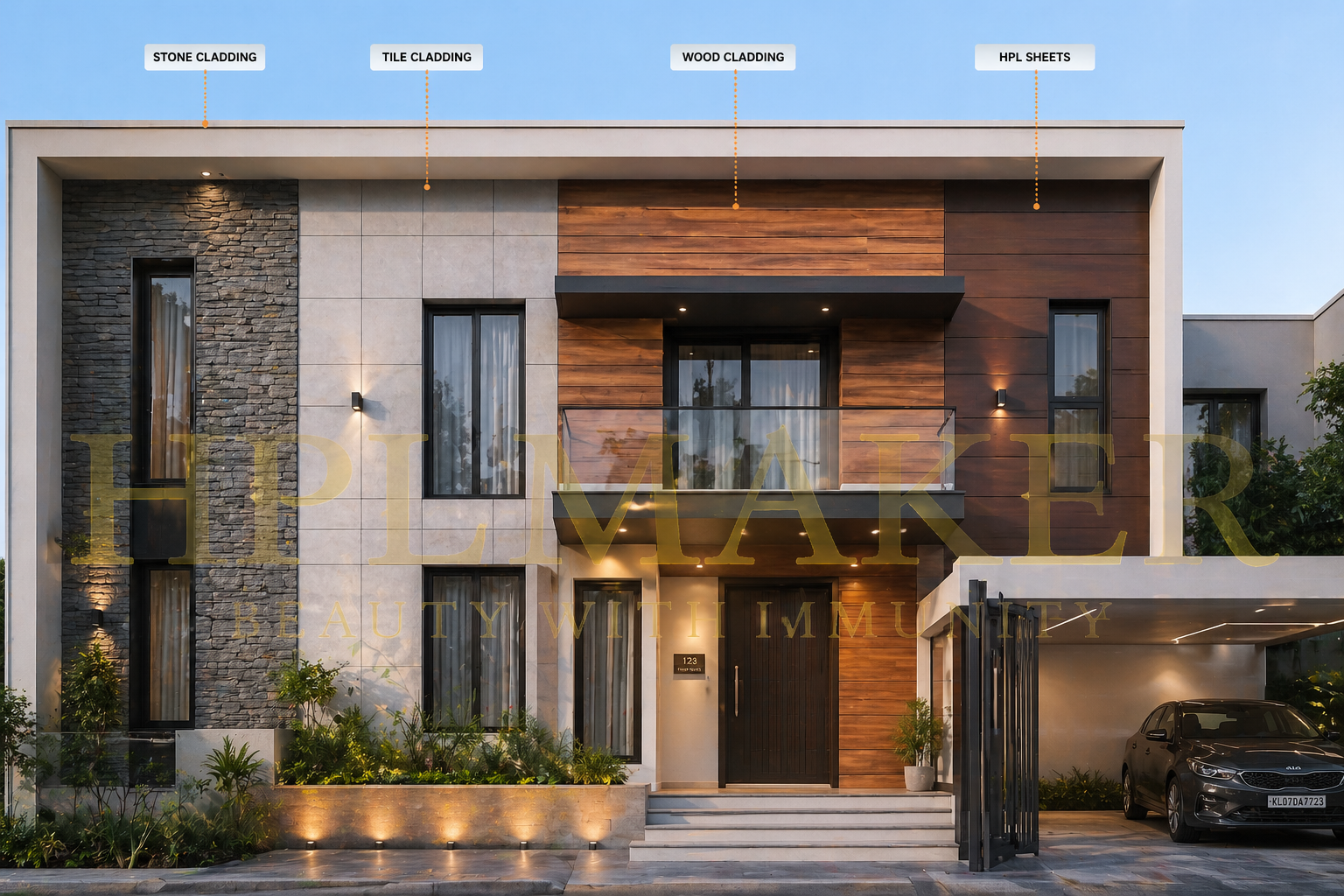
Introduction
Choosing the right exterior material for your home in India is not easy. Weather conditions here are extreme — from 45°C heat in summer to heavy rains in monsoon and constant dust in many regions.
Most people focus only on design, but the real question is:
Will your exterior material survive Indian weather for years?
In this guide, we will compare the top 7 exterior cladding materials used in India and help you choose the best option for long-term performance.
🌦️ What Makes Indian Weather Challenging?
Before choosing a material, you need to understand what your walls face every day:
- Strong sunlight (UV damage)
- Heavy rainfall and moisture
- Dust and pollution
- Temperature changes
👉 Not every material can handle all of these.
🔝 Top 7 Exterior Cladding Materials in India
1. Paint (Traditional Option)
Paint is the most common choice because it is cheap and easy to apply.
Pros:
- Low initial cost
- Easily available
Cons:
- Fades quickly in sunlight
- Peels during monsoon
- Needs repainting every 2–3 years
👉 Best for short-term use only
2. Exterior Tiles
Tiles are used for modern-looking homes and partial cladding.
Pros:
- Water resistant
- Good design options
Cons:
- Can crack over time
- Joints get dirty
- Installation is tricky
3. ACP Sheets (Aluminium Composite Panels)
Popular in commercial buildings.
Pros:
- Lightweight
- Smooth finish
Cons:
- Can dent easily
- Not very strong in long term
- Color fading over time
4. Natural Stone Cladding
Stone gives a premium and solid look.
Pros:
- Strong and durable
- Natural appearance
Cons:
- Expensive
- Heavy structure load
- Limited design flexibility
5. Wood Cladding
Real wood gives a rich and warm look.
Pros:
- Premium aesthetic
- Natural feel
Cons:
- High maintenance
- Prone to termites
- Affected by moisture
6. Brick Cladding
Used in traditional and rustic designs.
Pros:
- Strong structure
- Unique look
Cons:
- Limited modern appeal
- Dust accumulation
- Not suitable for all designs
7. HPL Sheets (Modern Solution)
This is where modern construction is shifting.
Brands like HPLMaker offer exterior-grade HPL sheets designed for Indian weather.
Pros:
- UV resistant (no fading)
- Waterproof
- Very low maintenance
- 10–15 years lifespan
- Modern premium designs
Cons:
- Higher initial cost than paint
👉 But long-term performance makes it the best choice.
📊 Quick Comparison Table
| Material | Lifespan | Maintenance | Weather Resistance | Cost Over Time |
|---|---|---|---|---|
| Paint | Low | High | Low | High |
| Tiles | Medium | Medium | Medium | Medium |
| ACP | Medium | Medium | Medium | Medium |
| Stone | High | Low | High | High |
| Wood | Medium | High | Low | High |
| Brick | High | Medium | Medium | Medium |
| HPL Sheets | High | Low | High | Cost-effective |
🏠 Which Material is Best for You?
Choose Paint if:
- Budget is very low
- You don’t mind repainting
Choose Stone/Wood if:
- You want premium look and have high budget
Choose HPL Sheets if:
- You want long life + modern design + low maintenance
👉 That’s why most new-age builders are choosing HPL sheets.
🔄 Real-Life Insight
In cities with extreme heat like Jaipur or Nagpur:
- Paint fades within 2–3 years
- ACP starts losing finish
- Wood needs maintenance
👉 But HPL sheets continue to look new for years.
❓ FAQ Section
Q1. Which exterior material lasts the longest in India?
Stone and HPL sheets are among the longest-lasting materials.
Q2. Is HPL better than tiles?
Yes, HPL offers better durability and lower maintenance.
Q3. Which material is best for low maintenance?
HPL sheets require the least maintenance.
Q4. Are HPL sheets suitable for all climates?
Yes, they perform well in heat, rain, and pollution.
✅ Final Conclusion
There is no one-size-fits-all solution, but if you are looking for a balance of durability, design, and long-term value, HPL sheets clearly stand out.
With trusted brands like HPLMaker, homeowners across India are upgrading their exteriors with smarter materials.