
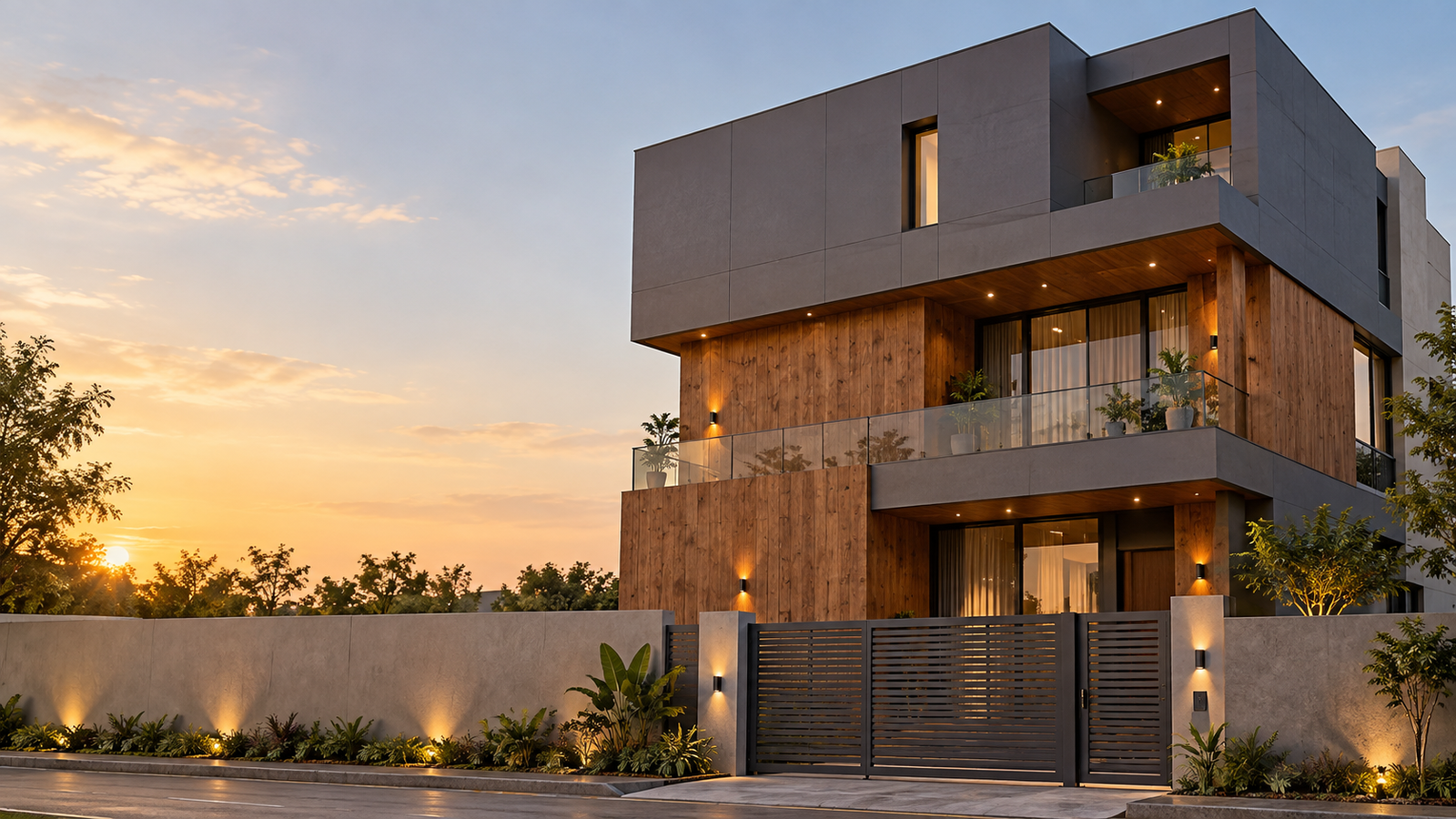
Most exterior cladding content focuses on homes, because that’s where the bulk of individual buying decisions happen. But a meaningful share of exterior HPL sheet volume goes into commercial and institutional projects, which have their own specific requirements worth understanding.
Retail and showroom frontages
Brand-consistent colour across multiple store locations, low-maintenance surfaces that don’t need repainting between store refreshes, and fast installation that minimises how long a storefront is disrupted — all specific priorities for retail chains that a residential-focused product conversation doesn’t usually cover.
Educational and institutional buildings
Schools, colleges and institutional campuses often specify exterior cladding partly for maintenance-budget reasons — a public institution repainting large campus facades every few years is a real recurring cost that a one-time cladding installation avoids. Fire performance documentation tends to matter more here too, given occupancy patterns and public building code requirements.
Healthcare and hospitality facilities
Both categories tend to prioritise a premium, well-maintained appearance consistently, without the disruption a repaint cycle causes to an operating hospital or hotel. Cladding installation, properly planned, can often be sequenced to avoid meaningfully disrupting operations, unlike a full repaint that affects the building’s appearance for days at a time.
Office and corporate buildings
Corporate facades are increasingly specified with fire performance as a genuine due-diligence item, not an afterthought, particularly for taller buildings — this is covered in more depth in our factory testing post. Brand colour matching (see our custom colour matching post) also comes up often here, tying a corporate facade to brand identity.
What’s different about specifying at this level
Commercial and institutional projects typically go through a proper specification and tender process, with documentation requirements (fire certificates, technical data sheets, sometimes third-party testing verification) that a straightforward residential order doesn’t usually need. HPLMaker’s technical team supports this level of documentation directly for architects and specifiers.
FAQ
Does commercial-scale specification cost more per panel than residential?
Not inherently — pricing is driven by volume and finish choice more than building type, though documentation and testing requirements can add to project scope and timeline.
Can HPLMaker support a formal tender submission with required technical documentation?
Yes, this is standard for commercial and institutional project inquiries — reach out with the specific documentation requirements for your tender.
Is there a different warranty structure for commercial versus residential projects?
Core product warranty terms are generally consistent; large commercial projects sometimes have project-specific contractual terms worked out separately.