
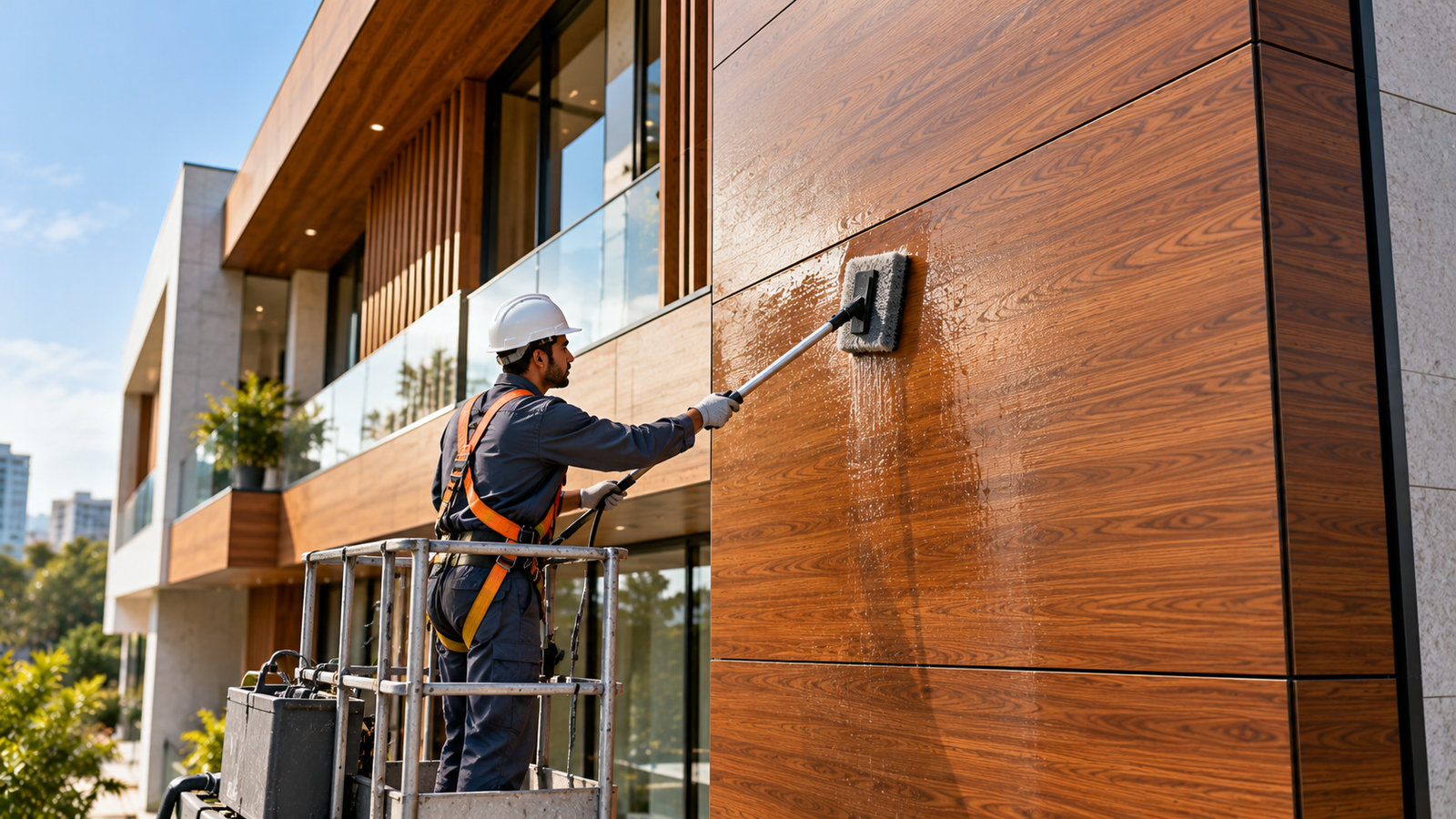
Exterior HPL is designed for demanding environments, but a facade still benefits from routine cleaning and inspection. Good maintenance is less about aggressive chemicals and more about using the correct method consistently.
Routine Cleaning
Start with loose dust and surface dirt. Use clean water and a soft cloth or suitable non-abrasive cleaning equipment. For persistent dirt, use a mild cleaning solution compatible with the manufacturer’s instructions.
Do Not Use Abrasive Methods
Hard abrasive pads, aggressive solvents or unapproved chemicals can affect the decorative surface. Always test a cleaning method on an inconspicuous area when the product guidance is uncertain.
Remove Stains Early
Oil, adhesive residue, paint splashes and other contaminants become harder to remove after prolonged exposure. Site teams should clean accidental contamination as soon as practical.
Inspect More Than the Surface
Maintenance should also include visual checks of joints, flashings, drainage points and accessible fixings. A panel may look perfect while a problem is developing in the supporting system.
Suggested Maintenance Checklist
- Check visible surface condition
- Clean dirt and deposits
- Inspect panel joints
- Check drainage paths
- Inspect accessible fixings
- Record any damaged panels
- Use manufacturer-approved cleaning procedures
Frequently Asked Questions
Can HPL be pressure washed?
Use only cleaning pressure and equipment permitted by the manufacturer’s maintenance guidance. Excessive pressure can damage joints or force water where it should not go.
Can I use bleach on HPL?
Do not use strong chemicals unless they are specifically approved for the installed product.
How often should an HPL facade be cleaned?
Frequency depends on location, pollution, rainfall, building use and exposure. High-traffic commercial facades generally need more frequent cleaning than protected elevations.
For product-specific maintenance instructions, refer to the HPL Maker technical documentation for the exact exterior grade and finish used.