
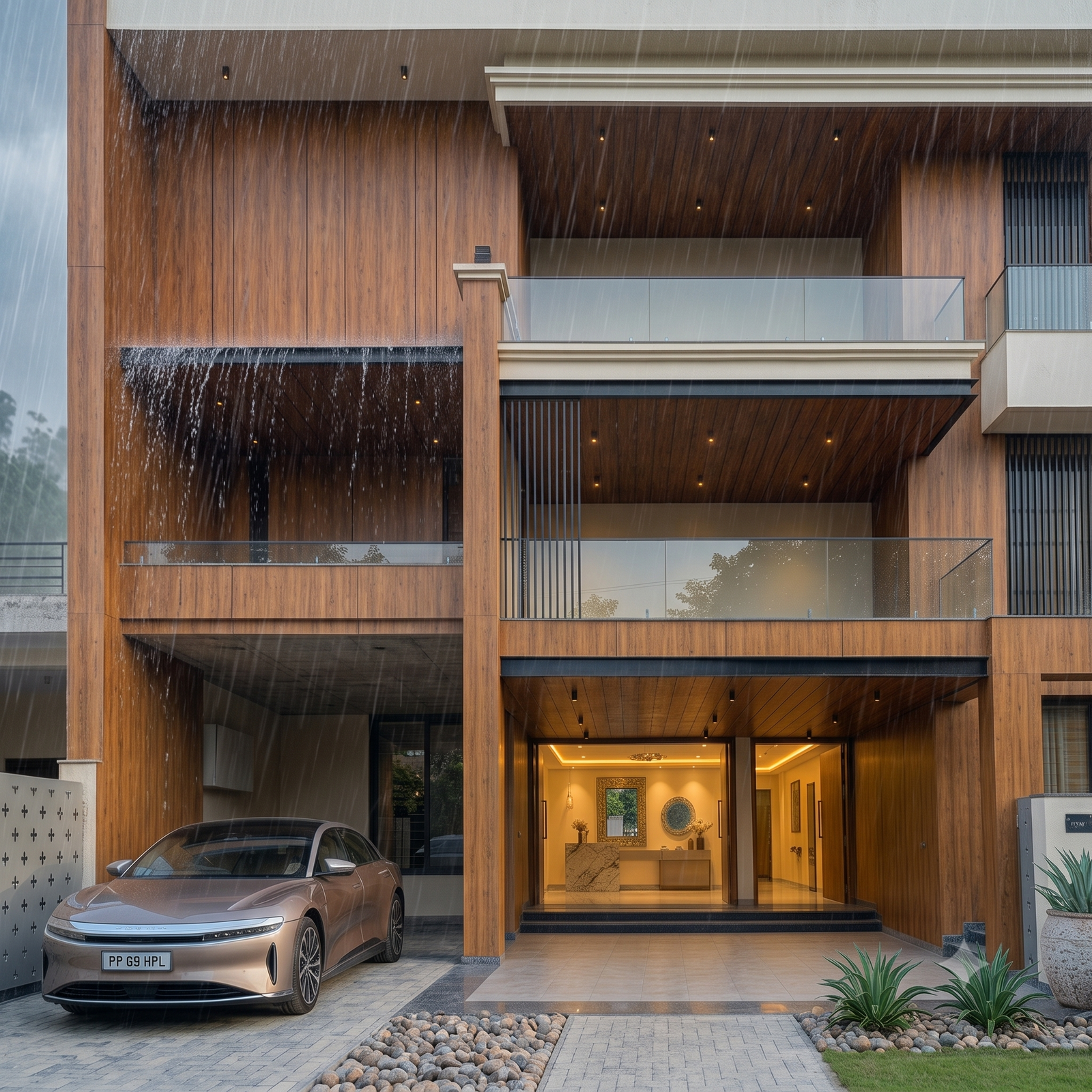
Understanding Monsoon Challenges for Exterior Cladding |
Why HPL Excels as Monsoon-Proof Cladding |
Design and Aesthetic Benefits for High-Rainfall Facades |
Installation, Maintenance, and Long-Term Value
Understanding Monsoon Challenges for Exterior Cladding
In regions of India that experience heavy rainfall, exterior cladding must withstand prolonged exposure to water, humidity, and temperature fluctuations. Constant moisture ingress can lead to swelling, warping, or surface degradation in many traditional materials. Architects and builders therefore seek solutions that offer reliable water resistance without compromising on appearance or structural integrity.
Impact of Prolonged Wet Conditions
When cladding absorbs water, it can promote mold growth, stain formation, and reduced thermal performance. In extreme cases, water penetration behind the facade may affect the underlying structure, leading to costly repairs. Selecting a material that inherently resists water uptake is essential for maintaining building durability during monsoon seasons.
Performance Expectations for Facades
A water-resistant facade should retain its original color, resist surface erosion, and require minimal upkeep despite frequent rain. Additionally, the material should be able to cope with the thermal expansion and contraction that accompany alternating wet and dry cycles common in high‑rainfall zones.
Why HPL Excels as Monsoon-Proof Cladding
HPLMAKER’s high pressure laminate is engineered to address the specific demands of heavy rainfall environments. Its core composition provides a barrier against water ingress while maintaining dimensional stability. This makes it a suitable choice for architects looking for monsoon‑proof cladding that performs consistently year after year.
Moisture and Water Resistance
The dense, non‑porous surface of HPLMAKER laminate prevents water absorption, eliminating the risk of swelling or warping. Unlike materials that rely on surface sealants, the resistance is built into the panel itself, ensuring long‑term performance even under relentless rain.
UV Stability and Color Retention
Exposure to intense sunlight combined with moisture can cause fading in many cladding options. HPLMAKER panels incorporate UV‑resistant additives that inhibit discoloration, allowing the facade to retain its original hue throughout the monsoon season and beyond.
Fire Retardancy and Safety
In addition to water resistance, the laminate possesses fire‑retardant properties that contribute to overall building safety. This characteristic is particularly valuable in public spaces such as schools, hospitals, and airports where fire performance standards are stringent.
Resistance to Scratches, Stains, and Termites
The hard wearing surface resists scratches from wind‑borne debris and stains from pollutants or biological growth. Furthermore, the material is not conducive to termite infestation, reducing maintenance concerns in humid climates where pests can be problematic.
Design and Aesthetic Benefits for High-Rainfall Facades
Choosing a cladding material that performs well in wet conditions does not mean sacrificing design flexibility. HPLMAKER offers a range of finishes, colors, and textures that enable architects to create visually striking water‑responsive facades while meeting functional requirements.
Versatile Finish Options
From solid colors to wood grain, stone, and metallic effects, the laminate can be matched to diverse architectural styles. This versatility allows designers to maintain a cohesive aesthetic across different building elements, including wall cladding, flooring, and false ceilings, even in high‑rainfall zones.
Consistent Appearance Over Time
Because the panels do not fade or discolor under UV exposure, the visual impact of the facade remains stable. This consistency reduces the need for periodic repainting or refinishing, which is especially advantageous in regions where access for maintenance may be limited during monsoon months.
Integration with Other Building Systems
HPLMAKER laminate can be used alongside other building components such as window frames, roofing, and interior elements. Its compatibility with standard fastening systems simplifies coordination between facade designers and structural engineers, ensuring a seamless envelope that resists water ingress at joints and interfaces.
Installation, Maintenance, and Long-Term Value
Proper installation and straightforward maintenance are critical to realizing the full lifespan of any exterior cladding system. HPLMAKER’s product attributes support efficient on‑site work and low‑life‑cycle costs, making it a practical choice for builders operating in monsoon‑prone areas.
Ease of Installation
The panels are lightweight yet rigid, allowing for quick handling and fixation using conventional mechanical fasteners or adhesive systems. Their dimensional stability minimizes the need for on‑site adjustments, reducing labor time and potential errors during facade erection.
Low Maintenance Requirements
Cleaning the surface typically involves simple washing with water and mild detergent. Because the laminate resists staining and does not require periodic sealing or repainting, ongoing upkeep is minimal compared with many traditional cladding options that demand frequent treatment to prevent water damage.
Long‑Term Warranty and Value
HPLMAKER backs its high pressure laminate with an up‑to‑25‑year Live Camera Warranty, described as the only one of its kind in India. This extended coverage reflects confidence in the product’s durability and provides architects and builders with added assurance regarding long‑term performance in heavy rainfall environments.
Talk to HPLMAKER
HPLMAKER is one of India’s leading high pressure laminate manufacturers, based in Indore and trusted by architects, builders, and homeowners across the country. Every sheet is backed by an industry-first up-to-25-year live camera warranty and complete local support. To get the right shade and the best price for your project, call +91 89824 90236 or write to marketing@hplmaker.com.