
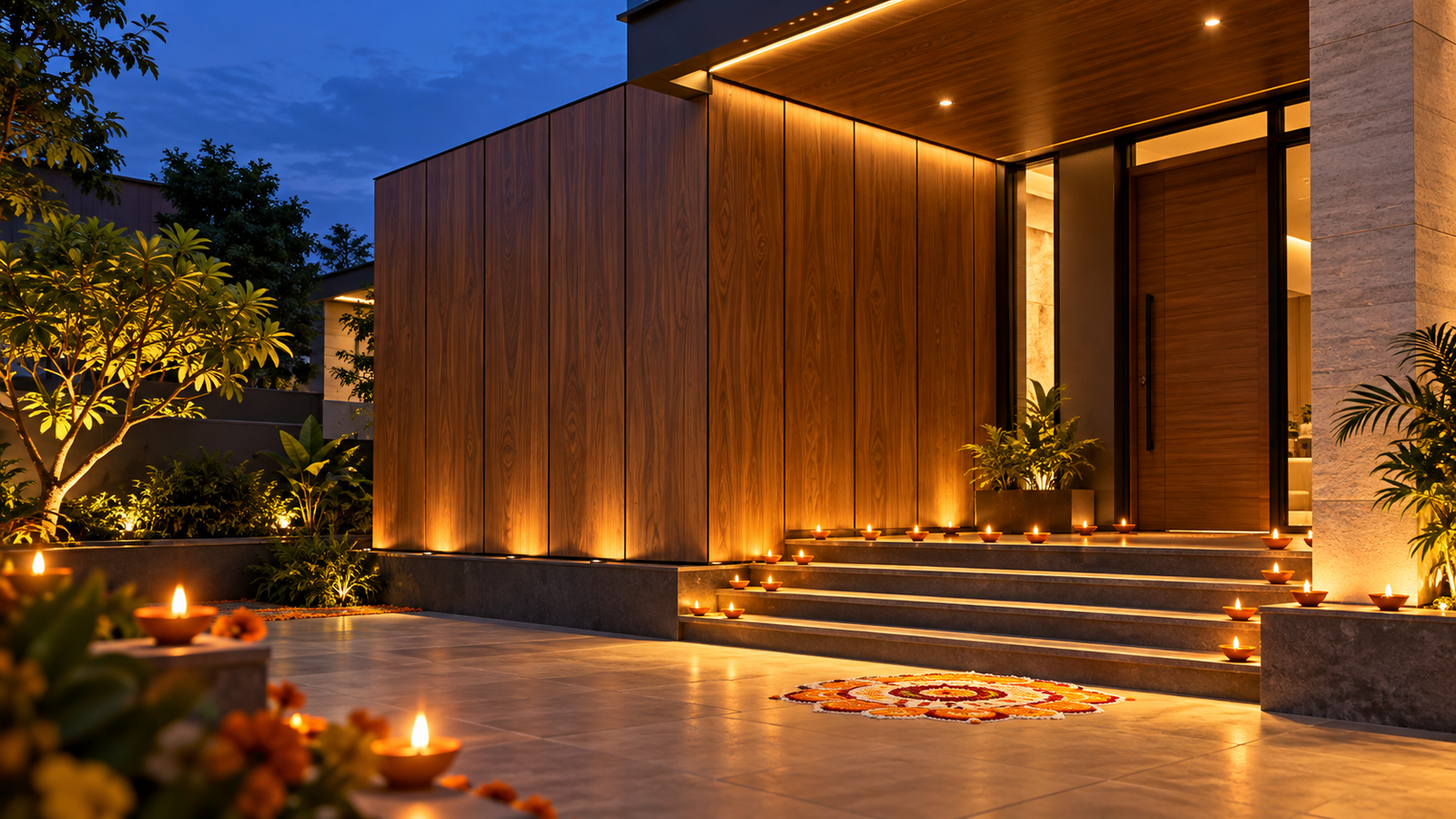
Shardiya Navratri 2026 runs from 11 to 19 October, with Dussehra on 20 October and Diwali following in early November. For anyone planning exterior work, this is not just a festival window — it is the first genuinely dry, workable stretch after the monsoon, and the reason India's construction and renovation activity peaks between now and December.
There is a practical reason Navratri became the traditional start of new undertakings in India, and it has as much to do with the weather as with the calendar. The monsoon has just lifted. The ground has dried. Walls that were damp for three months are finally readable. Labour that was idle is available again. Whatever you want to build, repair or replace, this is when it becomes possible.
For a building exterior specifically, that matters more than most people realise. Facade work needs dry walls, dry substrate and dry days in sequence. Attempt it in July and you fight the weather at every stage. Start it now and you have a clear run through to the following June.
Navratri 2026: The Dates That Matter
Vijayadashami is traditionally considered among the most auspicious days of the year for beginning something new — a griha pravesh, a purchase, a project. Many families time the start of home work to it deliberately. Panchang timings vary by city, so confirm your local muhurat rather than relying on a general date.
Nine Days, Nine Decisions
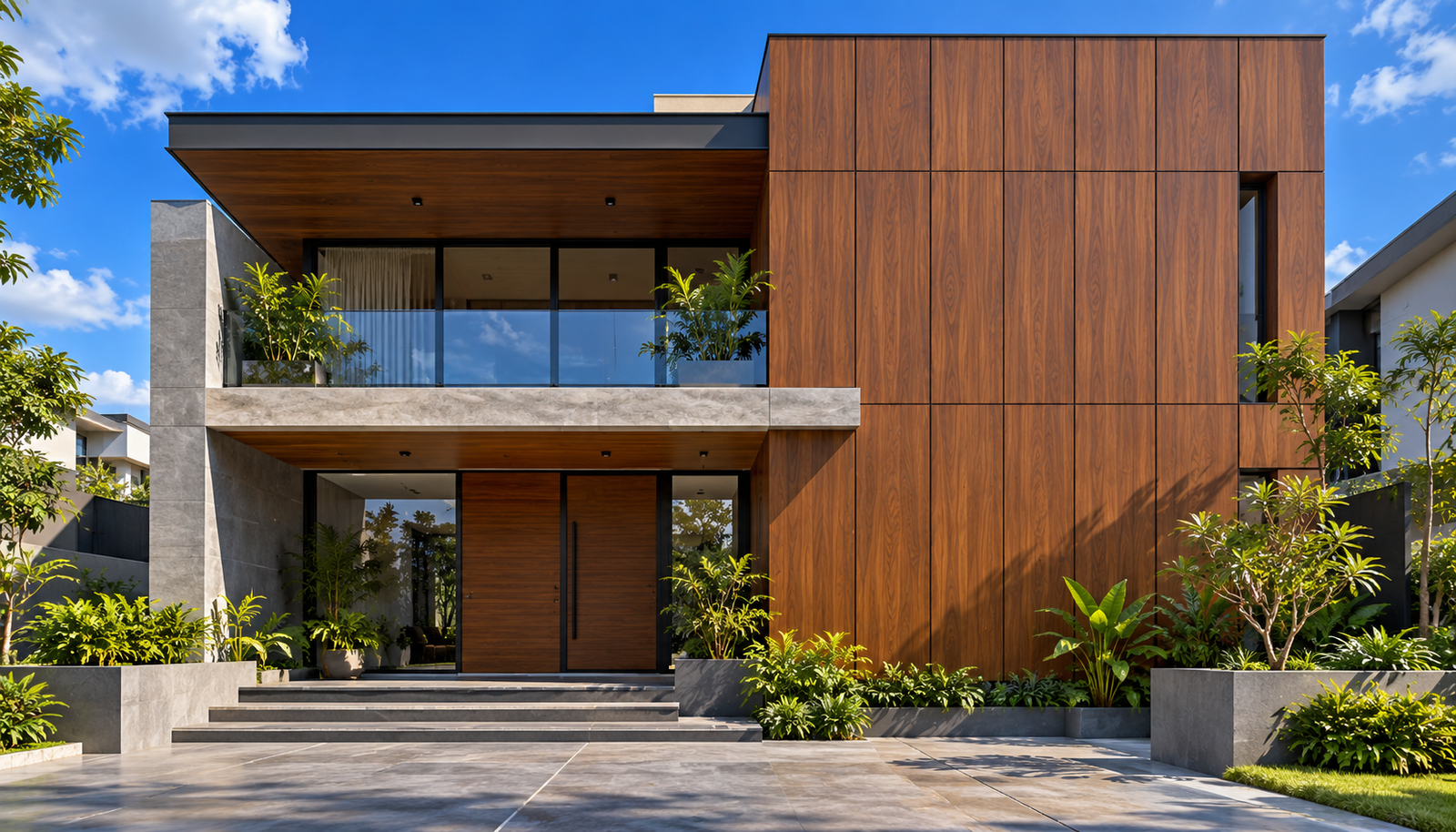
If you are considering a facade upgrade this season, the nine days of Navratri map rather neatly onto the nine decisions that actually determine whether the result lasts. Work through one a day and you will have a properly planned project by Dussehra — which is roughly the right amount of thinking time for a decision you will live with for twenty years.
Inspect honestly
Walk the perimeter. Damp patches still visible after the monsoon are real problems, not weather. Photograph everything.
Decide the scope
Full facade, or the entrance volume and gate only? Concentrated spend almost always looks better than thin coverage.
Settle the budget
Take framework and installation out first, properly specified. What remains decides how much area you clad.
Choose the material
Paint, textured finish, tile or cladding. Each has a different lifespan and a different maintenance cycle attached.
See real samples
Physical samples against your own wall, in daylight, at two times of day. Screen colours mislead reliably.
Fix the substructure
The frame behind the panels decides whether the facade reaches year fifteen. Never the line to economise on.
Choose the installer
Ask about framework material, spacing and expansion gaps. Ask to see work three years old, not three months.
Order as one batch
Shade varies between production runs. A split order can leave a visible band that cannot be corrected later.
Confirm the timeline
Work backwards from the date you want it finished, not forwards from today. Delivery is the inflexible stage.
The Festive Season Timeline, Realistically
If the goal is a finished exterior before Diwali, the arithmetic is tighter than it looks. Here is how the stages actually fall.
Count it forward and a moderate feature elevation started during Navratri finishes comfortably before Diwali. A full house facade started during Navratri is tight but achievable. A full facade started after Dussehra is not, and it is better to hear that now than in the last week of November.
Muhurat and Monsoon Are Saying the Same Thing
It is worth noticing that the traditional calendar and the practical one agree here. The reason Vijayadashami became the day to begin things was not arbitrary. In an agricultural society, it marked the point at which the rains had passed, the harvest was in, and labour and materials were free.
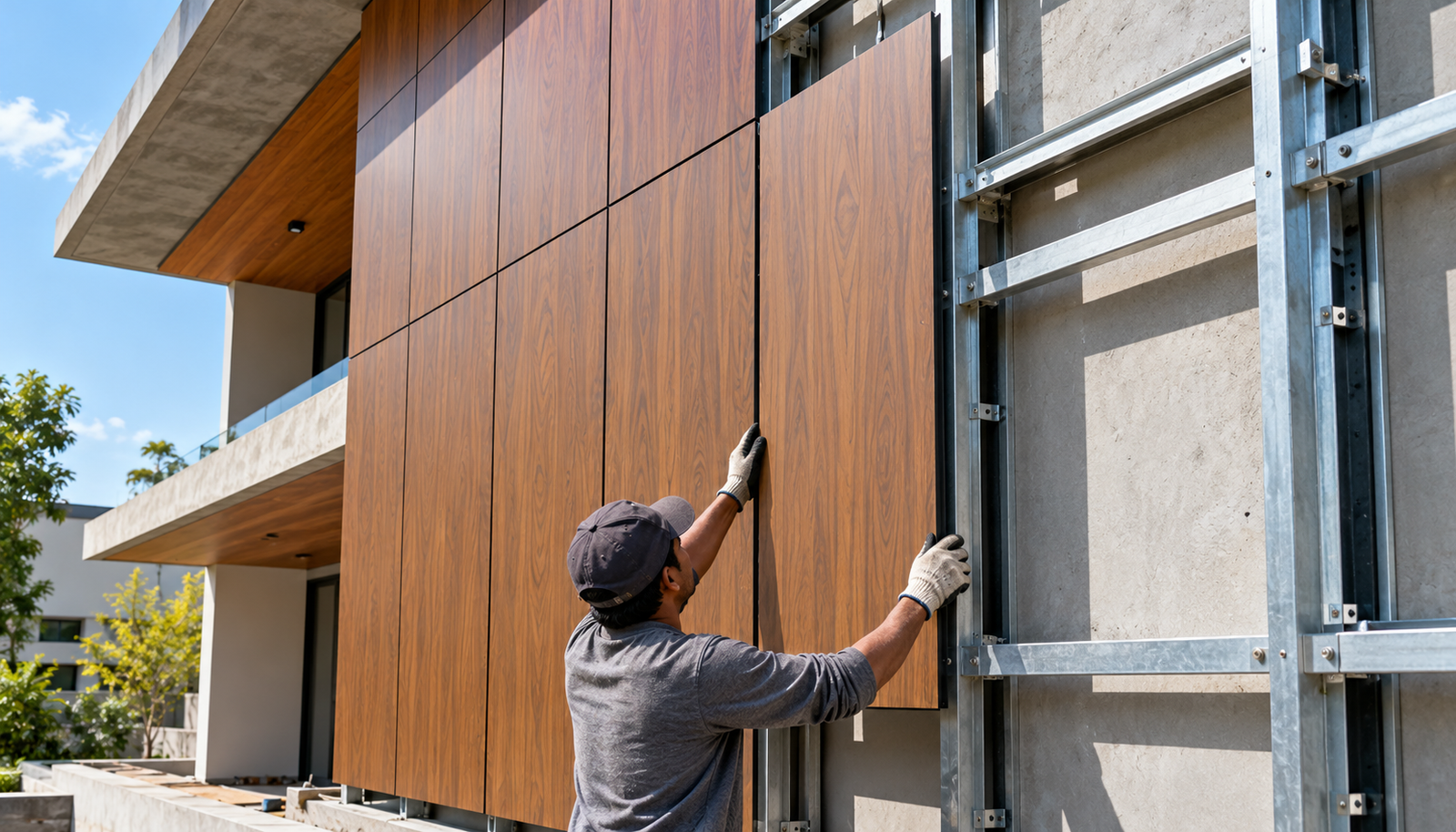
The same logic still holds for construction. Dry walls take a framework properly. Sealant cures as it should. Panels can be stored on site without being rained on. Installers are not working around downpours. Every technical reason to start work now lines up with the reason the date was chosen in the first place.
So if you are waiting for an auspicious moment to begin, this genuinely is one — and not only for the reason on the calendar.
One Thing Worth Not Rushing
Festive deadlines create pressure, and pressure produces the two decisions that cause most facade failures in India.
The first is cutting the substructure specification to afford a better panel. The frame sits inside a permanently humid cavity for twenty years. Plain mild steel with a coat of red-oxide primer does not survive that, and when it corrodes the entire facade comes off to replace it. If the budget will not stretch, reduce the clad area instead.
The second is accepting a split delivery to save a week. Panels from different production batches can differ slightly in shade — invisible on a sample, clearly visible as a band across a finished elevation, and impossible to correct without replacing panels.
Both of these are decisions made under time pressure in the last week of a project. Deciding them now, during Navratri, is most of the value of planning early.
Frequently Asked Questions
When is Navratri 2026 and when is Dussehra?
Why is Navratri considered a good time to start home construction?
Can a house facade be completed before Diwali if I start during Navratri?
What is the first step in planning an exterior upgrade?
Is October a good month for exterior cladding work in India?
What should I avoid when working to a festive deadline?
Shubh Navratri from all of us at HPLMaker
Planning an exterior this season? Send us your elevation photo and we will tell you honestly what is achievable before Diwali.
Talk to us on WhatsAppHPLMaker manufactures exterior-grade HPL cladding panels from Indore, serving projects across Madhya Pradesh and Central India.