
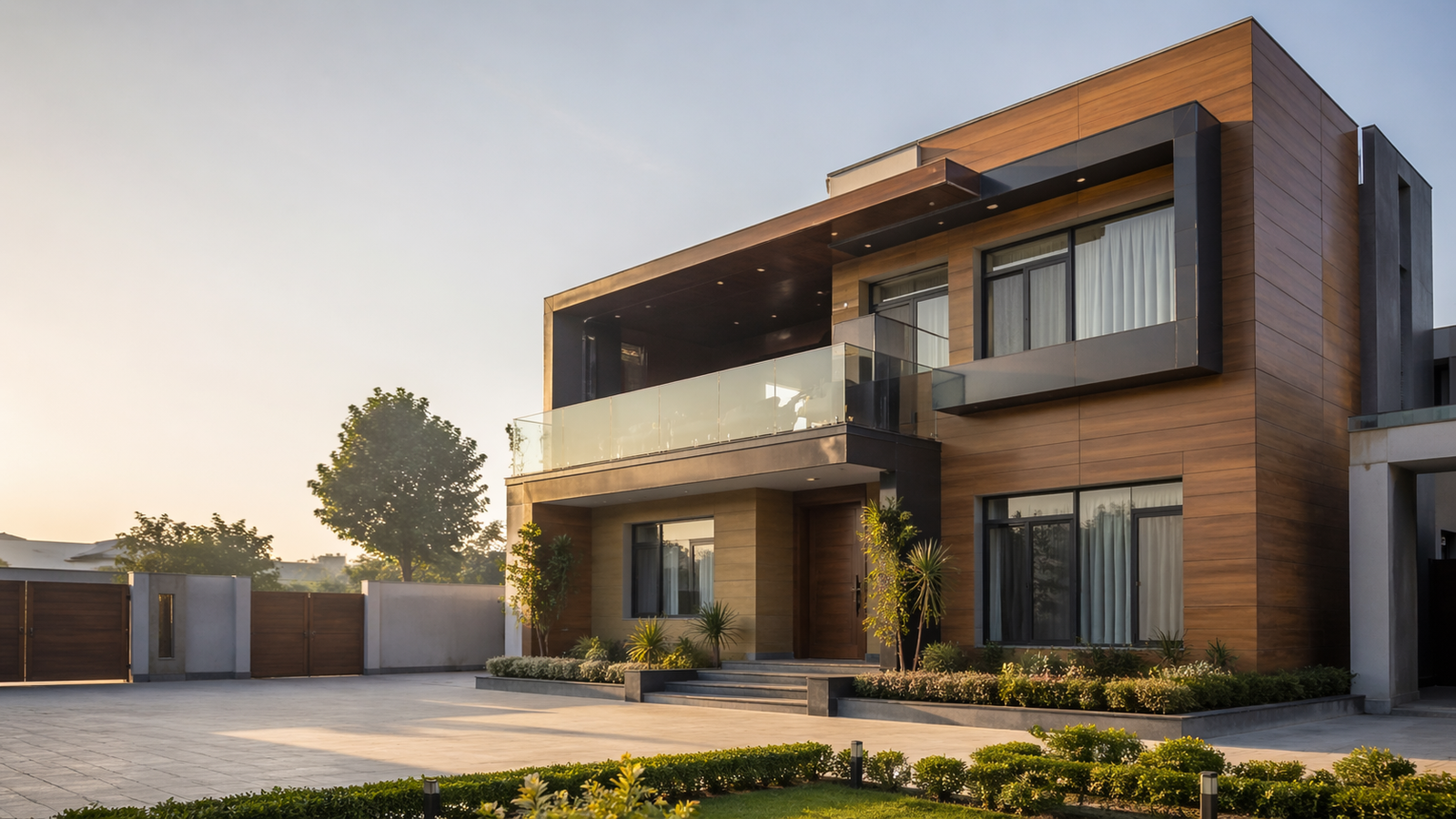
Sustainability Is No Longer a Trend—It’s the Future of Construction
The construction industry is undergoing a major transformation. Around the world, architects, developers, and homeowners are looking for smarter ways to build structures that are not only beautiful but also environmentally responsible.
Modern buildings are now expected to deliver:
- Long-term durability
- Reduced environmental impact
- Lower maintenance requirements
- Improved resource efficiency
- Sustainable performance throughout their lifecycle
As a result, sustainable facade materials are becoming a critical part of modern architecture.
Among the many solutions available today, High-Pressure Laminate (HPL) sheets are emerging as one of the most promising facade materials for future-ready buildings.
Their ability to combine aesthetics, durability, and long-term performance makes them an increasingly popular choice in sustainable construction projects worldwide.
Why Building Facades Matter in Sustainable Design
A building facade is much more than an exterior surface.
It serves as the first layer of protection against environmental conditions while influencing:
- Building lifespan
- Maintenance requirements
- Resource consumption
- Overall sustainability performance
When facade materials deteriorate quickly, they require frequent repairs and replacements.
This often leads to:
- Increased material waste
- Higher maintenance costs
- Additional resource consumption
- Greater environmental impact
Choosing durable facade materials is one of the most effective ways to improve building sustainability.
What Makes a Facade Material Sustainable?
Sustainable building materials typically share several important characteristics.
Long Service Life
Durable materials reduce replacement frequency and minimize waste generation.
Low Maintenance Requirements
Materials requiring fewer repairs consume fewer resources throughout their lifecycle.
Weather Resistance
Long-term performance reduces the need for restoration and replacement.
Efficient Manufacturing
Modern production processes increasingly focus on resource optimization.
Adaptability
Materials that remain relevant and attractive over time contribute to sustainable design.
HPL sheets perform exceptionally well across these criteria.
Understanding HPL Sheets
High-Pressure Laminate sheets are manufactured by compressing multiple layers of kraft paper and decorative surfaces under extremely high pressure and temperature.
This process creates a dense and durable panel suitable for exterior applications.
Modern HPL sheets are available in:
- Wood finishes
- Stone textures
- Solid colors
- Architectural patterns
- Contemporary design collections
Their versatility allows architects to achieve a wide range of design objectives while maintaining long-term performance.
How HPL Sheets Support Sustainable Construction
Exceptional Durability
One of the most important sustainability benefits of HPL sheets is their durability.
Quality exterior-grade HPL sheets can withstand:
- Rain
- Heat
- UV exposure
- Humidity
- Daily environmental wear
Because they last longer, fewer replacements are required over the building’s lifecycle.
This helps reduce material consumption and construction waste.
Reduced Maintenance Requirements
Maintenance activities consume resources over time.
Traditional facade systems may require:
- Repainting
- Surface restoration
- Protective treatments
- Repair work
HPL sheets significantly reduce these requirements.
Their low-maintenance nature contributes to lower resource use throughout the life of a building.
Long-Term Aesthetic Performance
Buildings often undergo renovations because exterior materials lose their appearance.
Modern HPL sheets are engineered to maintain:
- Color stability
- Surface quality
- Design integrity
This reduces the need for cosmetic upgrades and extends facade lifespan.
Reduced Lifecycle Costs
Sustainability is closely connected to lifecycle efficiency.
Because HPL sheets combine durability and low maintenance, they help reduce:
- Repair expenses
- Replacement costs
- Resource consumption
This creates value for both property owners and the environment.
Why Architects Are Choosing HPL for Green Building Projects
Modern architects increasingly prioritize materials that support sustainable design goals.
HPL sheets offer several advantages:
Design Flexibility
Architects can achieve premium aesthetics without sacrificing performance.
Long-Term Reliability
Durability supports sustainable building strategies.
Low Operational Impact
Reduced maintenance requirements contribute to improved lifecycle efficiency.
Contemporary Appearance
Modern design collections complement current architectural trends.
These qualities make HPL sheets suitable for both residential and commercial projects.
Applications of Sustainable HPL Facades
Residential Projects
Modern homes increasingly use HPL cladding to create durable and attractive exteriors.
Commercial Buildings
Offices and retail developments benefit from facade systems that maintain appearance while minimizing maintenance.
Educational Institutions
Schools and universities often prioritize long-lasting materials capable of delivering reliable performance.
Hospitality Projects
Hotels and resorts require facade solutions that balance luxury aesthetics with operational efficiency.
Healthcare Facilities
Hospitals benefit from durable and low-maintenance exterior systems.
Global Sustainability Trends Driving Demand
Organizations such as the World Green Building Council continue to emphasize the importance of durable and resource-efficient building materials.
As governments and developers focus on:
- Green building certifications
- Carbon reduction goals
- Lifecycle performance
- Resource efficiency
the demand for sustainable facade solutions is expected to grow significantly.
HPL sheets are well positioned to support these evolving construction priorities.
Why HPLMaker Is Ready for the Future
As sustainable architecture continues to evolve, manufacturers must provide products that meet modern performance expectations.
HPLMaker offers premium exterior-grade HPL sheets designed for long-term durability and architectural excellence.
Its product range provides:
- Weather-resistant performance
- UV protection
- Low-maintenance facades
- Premium wood-finish designs
- Modern architectural aesthetics
- Long service life
These characteristics make HPLMaker products suitable for future-focused residential, commercial, and institutional projects.
Explore sustainable facade solutions at HPLMaker Official Website.
The Future of Building Exteriors
The next generation of architecture will be defined by materials that combine beauty, durability, and sustainability.
Building owners increasingly want solutions that:
- Last longer
- Require less maintenance
- Reduce environmental impact
- Deliver long-term value
HPL sheets align perfectly with these expectations.
As construction practices continue shifting toward lifecycle performance and sustainability, HPL facades are likely to become even more prominent in modern architecture.
Conclusion
Sustainable construction is not simply about building greener structures today—it is about creating buildings that continue performing efficiently for decades.
Durable facade materials play a crucial role in achieving this goal.
HPL sheets offer an exceptional combination of aesthetics, weather resistance, low maintenance, and long-term performance, making them one of the most promising facade solutions for the future.
For architects, builders, and homeowners seeking sustainable exterior materials, HPLMaker provides premium HPL sheets that help create beautiful, durable, and future-ready buildings.
The future of architecture belongs to materials that perform as well as they look—and HPL sheets are leading the way.