
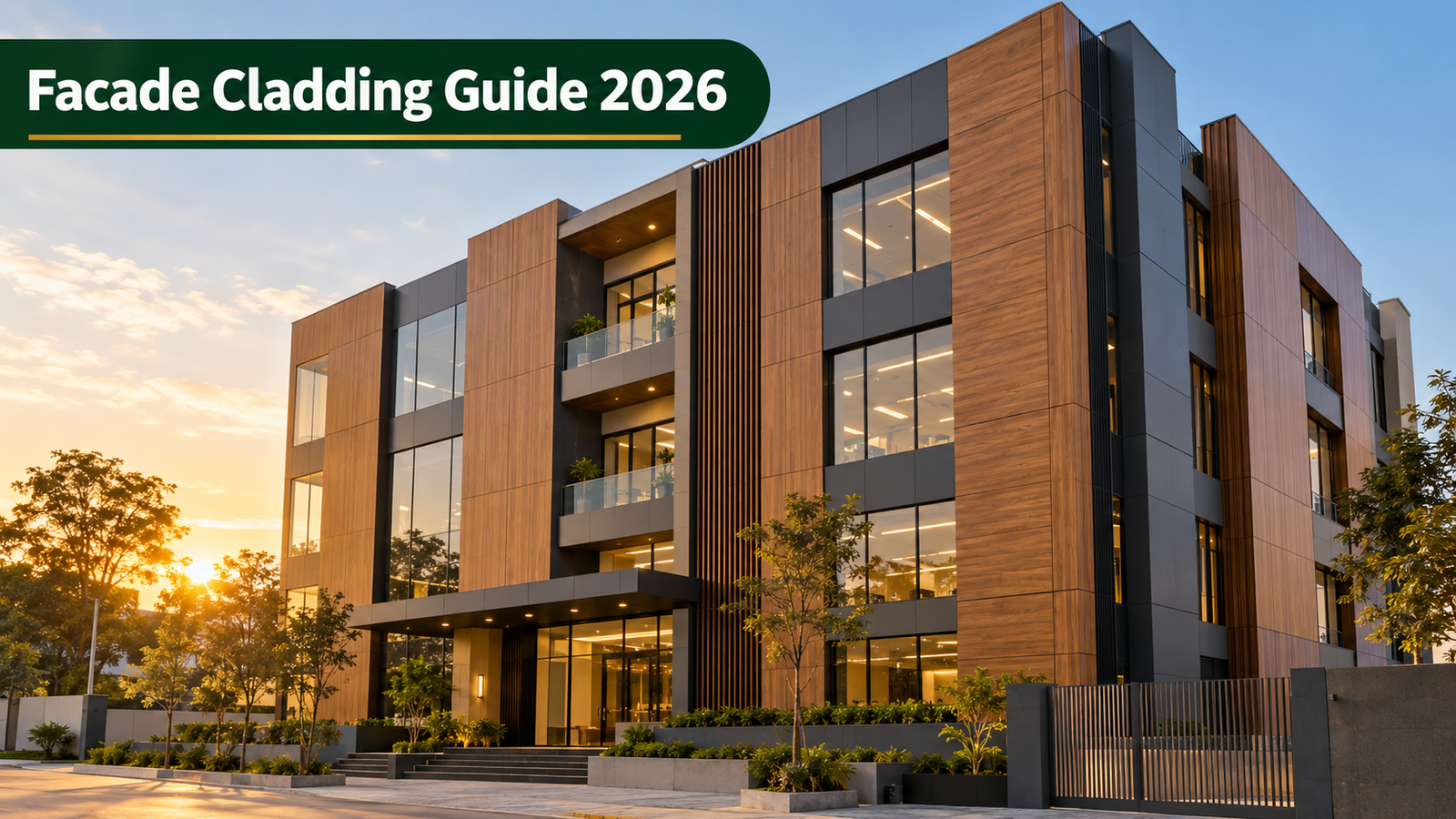
A building's facade is the first thing people see and the part that fights sun, rain and dust every single day. Picking the right facade cladding decides whether your building looks new in ten years or needs a costly makeover in three.
Facade cladding is an outer layer of panels fixed to a building's walls to protect them and give the building its look. The most common facade materials in India are HPL, ACP, solid aluminium, natural stone, fiber cement and glass. For most homes and mid-rise buildings, exterior HPL panels offer the best balance of design range, weather resistance, light weight and near-zero maintenance.
- Facade cladding protects walls from water, heat and UV, and sets the building's style.
- The six main facade materials each suit a different budget, height and design goal.
- A ventilated facade (panels on a frame with an air gap) keeps walls drier and cooler.
- Upkeep over 10 to 20 years matters more than day-one price.
- Check fire performance, warranty and installer experience before you choose.
What Is Facade Cladding?
Think of facade cladding as a raincoat for your building. The structural wall behind it carries the load; the cladding takes the beating from weather and gives the outside its finish. Because it's a separate layer, you can change the look of an old building without touching its structure.
There are two ways to fix it. In direct-fixed cladding, the material is stuck or mortared straight onto the wall, which is how most stone and tile facades are done. In a ventilated facade, panels are screwed or riveted to a metal frame with an air gap behind them. Most modern architectural cladding, including HPL, ACP and aluminium facade panels, uses the ventilated method.
How a Ventilated Facade Works
The air gap is the clever part. Sun heats the outer panel, warm air rises through the gap and escapes at the top, and cooler air is pulled in at the bottom. That steady airflow carries away heat and moisture before they reach your wall.
We've explained the energy side of this in our guide to ventilated facades with HPL.
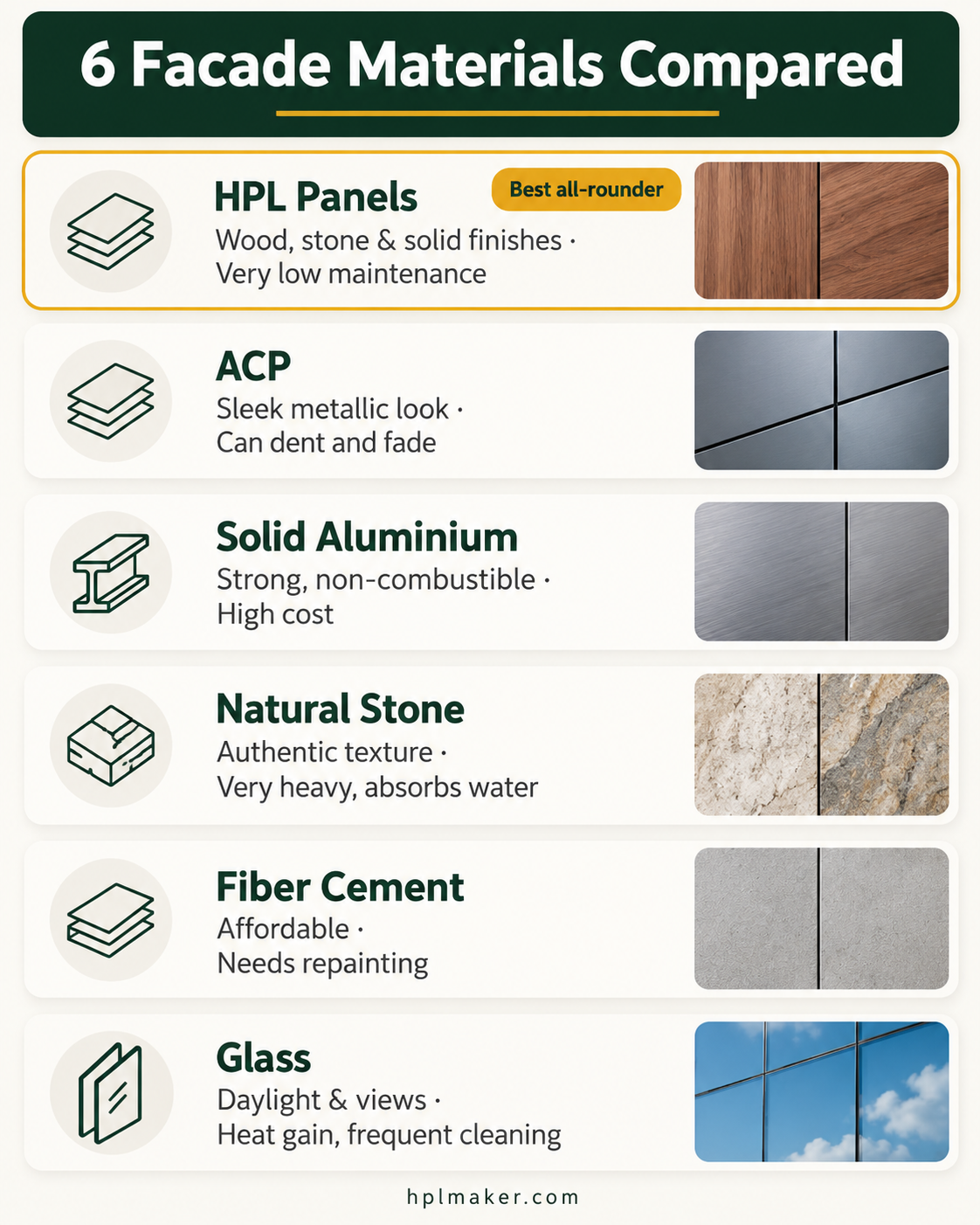
6 Facade Materials Compared
Tap a material to see where it shines and where it struggles. Every option below is a real choice on Indian buildings today; the right one depends on your height, budget and how much upkeep you're willing to do.
1. HPL (High Pressure Laminate) Panels
Dense panels made by pressing resin-soaked paper layers under heat and pressure, with a UV-protected decorative surface.
2. ACP (Aluminium Composite Panels)
Two thin aluminium skins bonded to a plastic or mineral core, usually 3 to 4 mm thick.
3. Solid Aluminium Facade Panels
Single solid aluminium sheets, usually 2 to 3 mm, powder-coated or PVDF-coated.
4. Natural Stone Cladding
Thin slabs or strips of sandstone, granite, slate or quartzite fixed to the wall.
5. Fiber Cement Boards
Sheets made of cement, sand and cellulose fibre, usually painted after installation.
6. Glass Facades
Curtain walls or structural glazing that make the facade itself transparent.
Facade Materials Side by Side
| Material | Look & design range | Weather & water | Maintenance | Weight | Relative cost |
|---|---|---|---|---|---|
| HPL panels | Very wide: wood, stone, solid | Excellent; near-zero absorption | Very low | Light | Mid |
| ACP | Metallic and solid colours | Good; colour can fade | Low to medium | Very light | Low to mid |
| Solid aluminium | Metallic, perforated, folded | Excellent | Low | Light | High |
| Natural stone | Natural, varies by batch | Porous stones absorb water | Medium to high | Very heavy | Mid to high |
| Fiber cement | Paint colours | Fair; edges need sealing | Medium (repainting) | Medium | Low |
| Glass | Transparent, reflective | Good; heat gain is the issue | High (cleaning) | Heavy | High |
Why HPL Is Winning on Indian Facades
Indian buildings face a tough mix: fierce summer sun, heavy monsoons, dust and pollution. A facade material has to handle all of it without constant repairs. That's where exterior HPL stands out.
It shrugs off water. HPL's resin-pressed core absorbs almost no water, so monsoon rain runs off instead of soaking in. No damp patches, no algae, no white salt marks.
The colour holds. A UV-protective top layer keeps wood, stone and solid finishes from fading in strong sun. That's why HPLMaker backs its exterior sheets with a 25-year warranty.
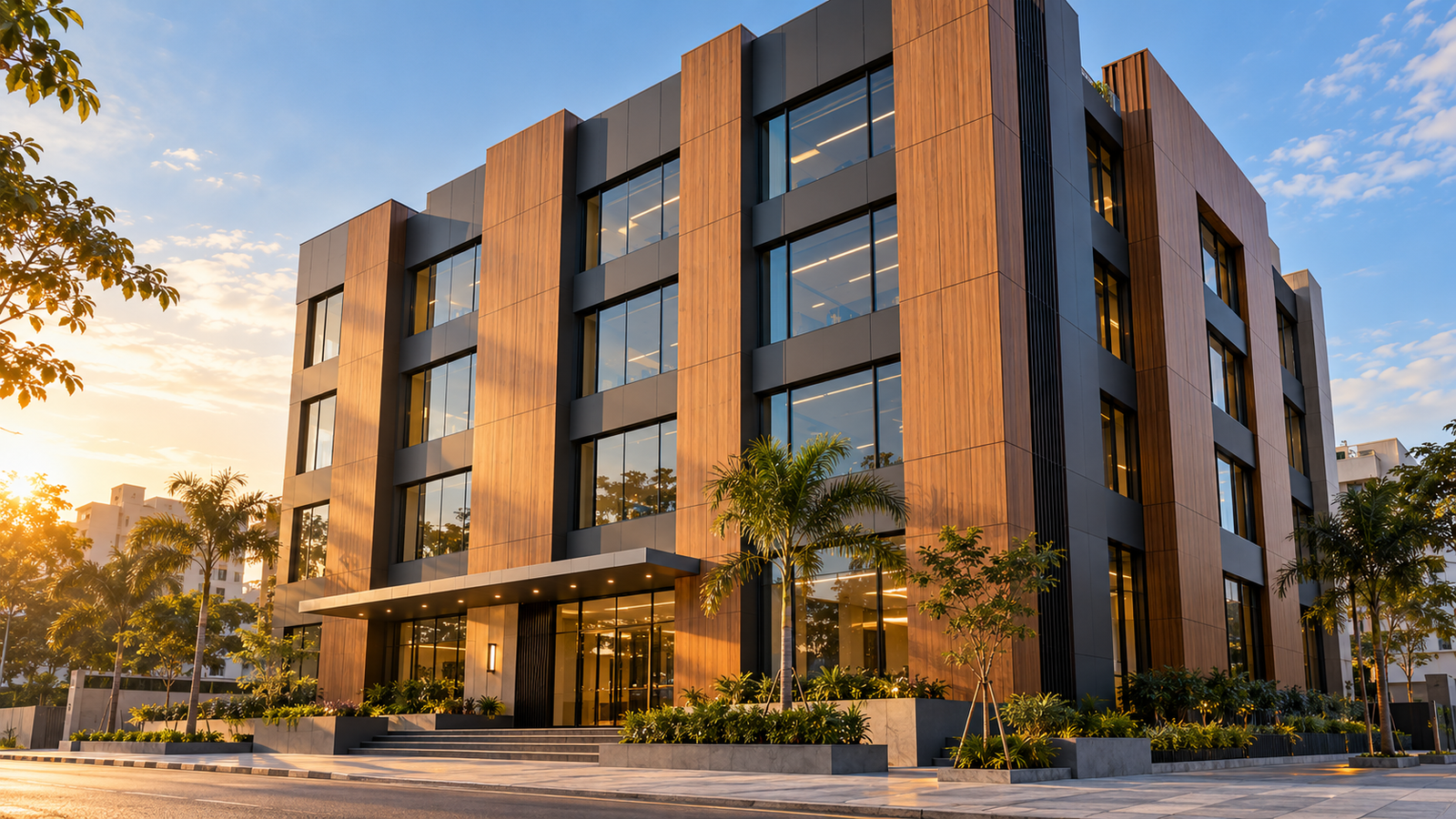
It gives architects freedom. One facade can mix a wooden finish on balconies, a stone finish on columns and a solid colour on the main wall, all in the same material and fixing system. Browse the options on our HPLMaker shade card.
It's easy on the structure. HPL is far lighter than stone or glass, so it suits upper floors and renovations of older buildings without adding much load.
For commercial and taller buildings, see our guide on commercial HPL cladding safety and durability.
How to Choose the Right Facade Cladding
- Start with the building's height and use. Homes and mid-rise buildings have the widest choice. For tall commercial towers, check local fire norms first and choose materials and cores that meet them.
- Decide the look you want. Warm and natural points to wood or stone finishes; sleek and corporate points to solid colours, metal or glass.
- Count the 15-year cost, not just the price per sq ft. Add repainting, cleaning, sealing and repairs. Low-upkeep materials often win over time.
- Plan the area and sheet count early. Use our free HPL sheet calculator to see how many 8 × 4 ft sheets your facade needs.
- Check warranty and installation. A good material fixed badly will still fail. Ask about the frame, joints and fixings, and read how it's done on our HPL installation page.
Common Facade Cladding Mistakes
Choosing on day-one price alone. A cheaper facade that needs repainting every few years quickly costs more than a premium one that doesn't.
Skipping the air gap. Fixing panels flat against a damp wall traps moisture. A proper ventilated frame protects both the panel and the wall.
Ignoring joint layout. Panel joints should line up with windows, slabs and corners. Random joints make even premium material look cheap.
Buying non-exterior grade sheets. Interior laminates aren't built for sun and rain. For outdoor use, insist on exterior-grade HPL with UV protection.
Frequently Asked Questions
What is facade cladding?
Facade cladding is an outer layer of panels or sheets fixed to a building's walls. It protects the structure from rain, heat and UV and gives the building its finished look.
Which facade material is best for Indian buildings?
For most homes and mid-rise buildings, exterior HPL panels offer the best mix of design choice, weather resistance, light weight and low maintenance. High-rise towers may need non-combustible options like solid aluminium, depending on local fire norms.
Is HPL better than ACP for facades?
HPL offers natural-looking wood and stone finishes, better impact resistance and stronger colour stability, while ACP suits flat, metallic, glossy designs. For homes and premium elevations, HPL is usually the better long-term choice.
What is a ventilated facade?
A ventilated facade is a cladding system where panels are fixed to a metal frame with an air gap behind them. The moving air carries away heat and moisture, keeping the wall drier and the building cooler.
How long does HPL facade cladding last?
Exterior-grade HPL with UV protection is built to last for decades. HPLMaker exterior sheets come with a 25-year warranty.
How many HPL sheets do I need for my facade?
Divide your facade area (after removing doors and windows, plus about 10% wastage) by 32 sq ft, the coverage of one 8 × 4 ft sheet. Our free HPL sheet calculator does this for you.
Planning a new facade?
Get shade options, samples and a project quote from the HPLMaker team.
WhatsApp Us Calculate Sheets