
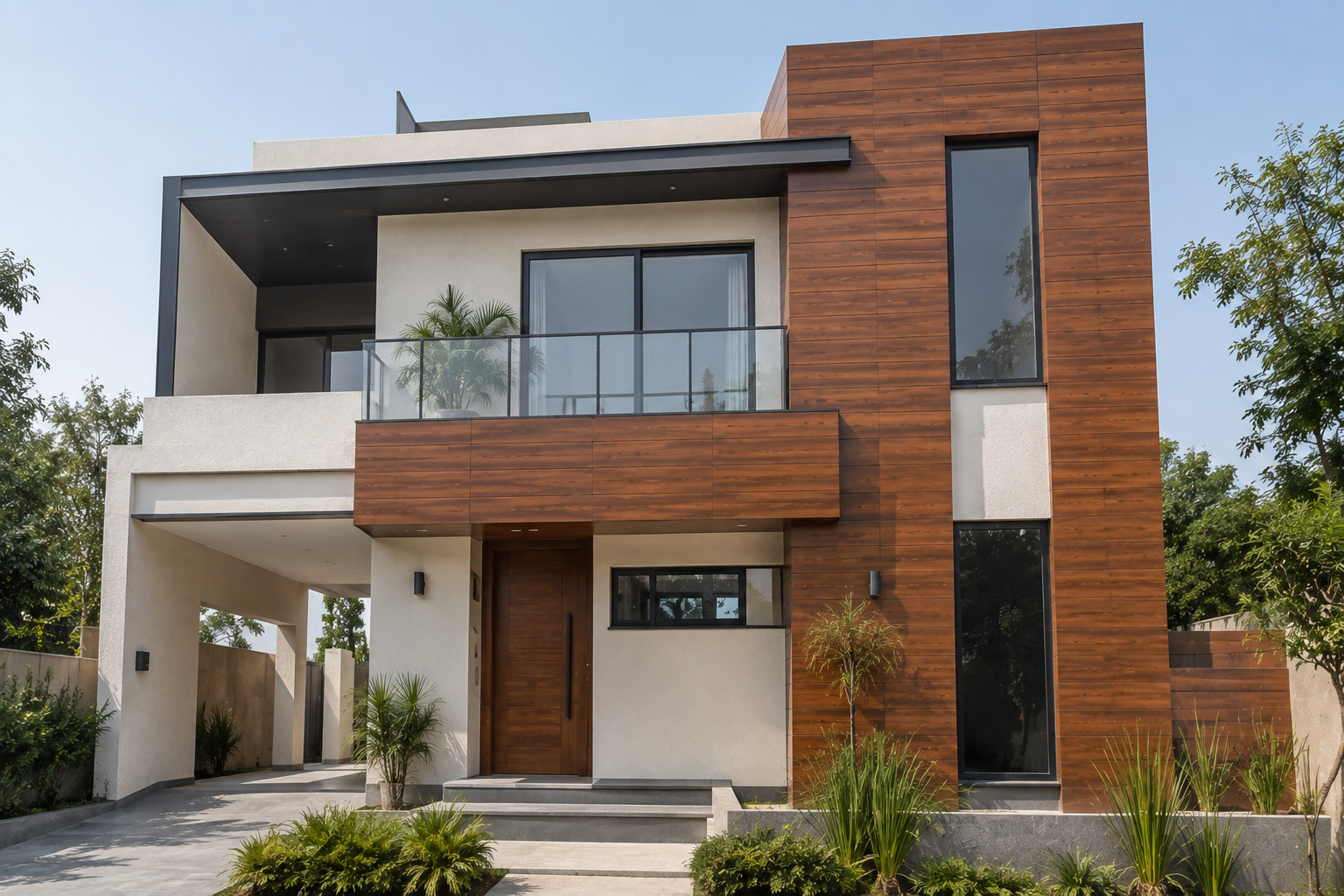
What Is HPL Wall Cladding?
HPL wall cladding is the use of high-pressure laminate panels as a visible architectural covering for interior or exterior walls.
For exterior applications, the selected HPL must be specifically suitable for outdoor use. The cladding is not simply a decorative layer; the final performance depends on the panel specification, support system, fixing method, joints and installation quality.
HPL wall cladding is increasingly used in modern residential and commercial architecture because it allows architects and homeowners to create defined textures, colours and patterns across otherwise plain wall surfaces.
Why Use HPL for Wall Cladding?
A good wall-cladding material needs to provide more than an attractive appearance.
For an exterior project, important considerations include:
- Appearance and finish
- Weather exposure
- Surface durability
- Maintenance requirements
- Panel dimensions
- Installation method
- Long-term performance
- Overall project cost
HPL can be considered where a project requires a decorative architectural surface combined with a durable panel-based cladding system.
Where Is HPL Wall Cladding Used?
Residential Exterior Walls
HPL can be used on selected portions of a house facade rather than covering the complete building.
Typical areas include:
- Entrance walls
- Front elevations
- Balcony walls
- Porch backgrounds
- Feature walls
- Vertical architectural elements
Commercial Buildings
HPL wall cladding can also be used on:
- Offices
- Showrooms
- Retail spaces
- Hotels
- Restaurants
- Institutional buildings
The design can range from a small accent zone to a large facade installation.
Exterior HPL Wall Cladding vs Painted Walls
Paint and HPL serve different purposes.
Paint provides a relatively simple surface finish, while HPL creates a dedicated architectural cladding layer.
With HPL, the final appearance can include wood, stone-inspired, solid or textured finishes without requiring those visual effects to be recreated through repeated painting.
The decision should therefore consider not just initial cost but also the desired appearance, maintenance expectations, installation requirements and project environment.
What Makes a Good Exterior HPL Cladding System?
The panel itself is only one part of the finished facade.
A properly planned system should consider:
HPL panel + support structure + fixing + joints + ventilation + drainage + substrate
This is particularly important on larger exterior walls.
The installation should follow the manufacturer’s technical recommendations and account for the building and environmental conditions.
Choosing HPL Thickness for Wall Cladding
HPLMAKER identifies 6mm as its most commonly used HPL thickness and lists standard sheet sizes including 4 × 8 ft, 4 × 10 ft and 5 × 10 ft. Customized sizes are also mentioned in the company’s FAQ.
However, the correct thickness should always be selected according to the application and installation system.
6mm should not be treated as a universal structural specification for every wall-cladding project.
How Is HPL Wall Cladding Installed?
The exact installation system depends on the product and project.
Before installation, the team should assess:
1. Wall Condition
The substrate should be suitable for the proposed support system.
2. Supporting Framework
Where a framed cladding system is required, the framework should be correctly aligned and fixed.
3. Panel Layout
Panel dimensions and joint positions should be planned before cutting.
4. Fixing Method
Use the fixing system recommended for the selected HPL product.
5. Joints and Movement
Panels need appropriate joint detailing to accommodate the behaviour of the complete facade system.
6. Ventilation and Drainage
Exterior cladding should be detailed so that moisture does not become trapped behind the panels.
7. Edge and Corner Details
Corners, openings and panel edges should be planned before installation instead of being improvised on site.
How Much Does HPL Wall Cladding Cost?
There is no single price for an HPL wall-cladding project.
The final installed cost can include:
- HPL sheets
- Supporting framework
- Cutting and fabrication
- Fasteners
- Accessories
- Transportation
- Installation labour
- Project-specific detailing
Therefore, comparing manufacturers only by sheet price can produce misleading conclusions.
How to Select HPL for an Exterior Wall
Before finalizing a product, check:
Exterior suitability
Confirm that the exact HPL specification is intended for outdoor use.
Climate
Consider sunlight, rainfall, humidity, temperature variation and the specific location of the project.
Finish
Choose a finish that works with the surrounding architecture.
Panel size
Larger sheets may reduce visible joints but can affect handling and cutting.
Installation system
Understand how the panels will actually be supported and fixed.
Warranty
Review the applicable warranty conditions before purchase.
Fabricator
Use an experienced installer familiar with the recommended system.
HPL Wall Cladding Design Ideas
Wood-Finish Cladding
Wood-inspired HPL can add warmth to a contemporary building while maintaining a clean architectural appearance.
Two-Tone Facade
Combine a wood finish with a neutral solid surface to create visual contrast.
Vertical Panels
Tall vertical panel layouts can emphasize the height of a building.
Horizontal Bands
Horizontal HPL strips can visually widen a facade.
Feature Entrance
Use HPL around the entrance rather than covering the entire facade.
Balcony Accent
HPL can create a consistent material language across balcony walls and selected facade sections.
Common HPL Cladding Mistakes
Choosing the material only by appearance
The finish is important, but exterior suitability should come first.
Ignoring the installation system
The panel and support system should be planned together.
Not planning joints
Poorly planned joints can affect the appearance and detailing of a facade.
Comparing only sheet prices
The installed system is what determines the actual project cost.
Using an inexperienced fabricator
Incorrect fixing, alignment or detailing can compromise the result even when the panel itself is good.
Treating every climate the same
Exterior material selection should consider the project’s specific environmental exposure.
HPL Wall Cladding Maintenance
Exterior HPL should be cleaned according to the manufacturer’s recommendations.
For routine maintenance:
- Remove accumulated dust and dirt.
- Use appropriate cleaning methods for the surface finish.
- Avoid aggressive chemicals unless specifically approved.
- Inspect joints and fixing areas periodically.
- Address installation-related issues early.
Good maintenance should preserve both the appearance and performance of the complete cladding system.
Is HPL Wall Cladding Suitable for Indian Homes?
It can be suitable for many Indian residential and commercial projects, but the correct product and system should be selected according to the actual environmental conditions.
India includes very different climates, so a material decision for a dry inland city should not automatically be applied to a coastal or high-rainfall location.
The right approach is:
Climate → Application → Product specification → Installation system
Why HPL Wall Cladding Works for Modern Architecture
Modern architecture often combines multiple materials to create contrast.
HPL provides designers with another surface language that can complement:
- Concrete
- Glass
- Stone
- Metal
- Painted walls
- Wood-inspired elements
This makes it particularly useful for facade designs where one material alone would appear visually flat.
Frequently Asked Questions
What is HPL wall cladding?
HPL wall cladding is a panel-based wall covering system that uses high-pressure laminate sheets as the visible architectural surface.
Can HPL be used on exterior walls?
Exterior-grade HPL can be used on exterior walls when the product and complete installation system are suitable for outdoor conditions.
What thickness of HPL is commonly used?
HPLMAKER identifies 6mm as its most commonly used HPL thickness.
Is HPL wall cladding expensive?
The total cost depends on the HPL sheet, support structure, fabrication, accessories, labour and project location. Sheet price alone does not represent the final installed cost.
Can HPL be used for a house front elevation?
Yes. Exterior HPL can be used for selected facade areas, feature walls and front-elevation designs.
Does HPL wall cladding require a frame?
The required support system depends on the selected product and facade design. The manufacturer or project team should specify the appropriate installation method.
How do I choose HPL for my climate?
Start with the outdoor suitability of the exact product, then consider UV exposure, rainfall, humidity, temperature and the installation environment.
Conclusion
HPL wall cladding can transform a plain exterior wall into a defined architectural feature while offering a wide range of colours, textures and design possibilities.
But successful cladding is not simply about choosing a beautiful panel.
The best results come from selecting the correct exterior-grade HPL, thickness, finish, supporting structure and installation method for the project.
For architects, builders and homeowners, the goal should be to design the complete cladding system—not simply purchase a sheet.